

Food Is FUEL: What I Eat in a Typical Day Training For Ironman
I’ve always had a pretty good relationship with food.
I like to think that I eat pretty healthy and don’t restrict my diet (except I do have to keep an eye on the amount of chocolate and cookies I consume…)
But even I didn’t understand how the food I was eating directly impacted my performance. It wasn’t until my coach (who happens to be a registered dietician) looked at my daily diet that we realized I wasn’t eating enough to supporting my level of training.
This unintentional under-fueling was:
Contributing to fatigue
Leaving me tired for the next day’s workout
Inhibiting recovery
Affecting my body’s ability to absorb training and get stronger
What was the main problem?
I was eating plenty of calories, but I wasn’t eating enough carbs!
You see, carbs tend to get a bad wrap in dieting circles. But as an endurance athlete, we need carbs. A LOT of carbs.
So, today I want to run through a few basics about daily nutrition for athletes, and I’ll share what I eat in a typical day as a (primarily long-course) triathlete.
How daily nutrition helps you as an athlete
Not everyone has a healthy relationship with food. Athletes, specifically, are at high risk of disordered eating, especially when there’s overemphasis on body weight as a way to obtain peak performance. (If that’s you, it might be a good idea to talk to a professional about how to restore a healthy relationship with food.)
Because the bottom line is this:
Food is fuel. Fuel helps you perform. Therefore, if you don’t eat enough of the right foods, your body won’t have the fuel it needs to perform.
Athletes who fuel well can train harder, recover faster, and get stronger.
Athletes who do not fuel well are at risk of fatigue, sickness, injury, and performance plateaus. This can carry over into more complicated issues, like REDs (Relative Energy Deficiency) which can lead to things like menstrual dysfunction, low testosterone, hormone problems, excessive fatigue, poor recovery, and mood changes.
The energy we use on a daily basis comes from carbohydrates, protein, and fat. These essential building blocks are used for muscle and bone growth, immunity, hormone production, and energy.
Carbohydrates: The body’s primary energy source. Carbohydrates are broken down into glucose to be used during training. Glycogen is stored in the muscles and liver to be used later on (like for your next day’s workout). Fun Fact: Carbs can also affect brain function and mood. Feeling cranky? You might be low on carbs!
Protein: Involved in the building and repairing of muscles, bones, skin, hair, ect.
Fat: Helps with the absorption of vitamins like A, D, E and contributes to feelings of fullness
How much should I be eating to support triathlon training?
I’m not talking about fueling training sessions. For more information on how to do that, check out the article below.
The Most Common Triathlon Nutrition Mistakes (You Don't Know You're Making)
What I’m talking about is daily nutrition- everything you eat around those workouts. My coach happens to be a registered dietician (Marni Sumbal), and she helps us calculate our daily energy needs this way.
Carbohydrate recommendations:
Light exercise (30-60 minutes) 3-4 g/kg/body weight
Moderate (60-90 minutes) 4-5 g/kg/body weight
Moderate to high (90 min to 2.5 hours) 5-7 g/kg/body weight
High (2.5+ hours) 7-10 g/kg/body weight
So let’s use me as an example!
Convert weight from lb into kg.
I weight 130 lb, so let’s divide that by 2.2 = 59kg
Multiple weight in kg by carb recommendation to get daily carb intake.
Then, let’s multiple my weight in kg by the carb recommendation. So, if I was doing a moderate workout (60-90 min) that’s 4-5g carbs/kg of body weight. Therefore, 59kg x 5 is 295g carbs per day.
Daily carb intake x 4 is the amount of daily calories that should come from carbs.
So, 295g carbs per day x 4 is 1,181 calories from carbs a day!
You can do the same thing with protein (1.6-2.0 g/kg) and fat (1 g/kg). Protein is a bit easier to look at on your plate, but carbohydrates have always been harder for me. If you’re not great with numbers (like me) my coach provided some examples of what 25g carbs looks like.
25g carbs = 1 slice of bread, 1/2 cup cooked rice, 3/4 cup cooked oatmeal, 1/2 cup cooked pasta, 1 medium apple
A good rule of thumb for protein is about 3 oz of meat, chicken, or fish, 3 large eggs, 1 cup of greek yogurt.
This way, I can make sure I’m eating enough (of the right things) to support my training. The reason I included “long-course triathlete” in the post title is because the amount of food and carbs you need to support 70.3 or Ironman training will be different than for other types of events.
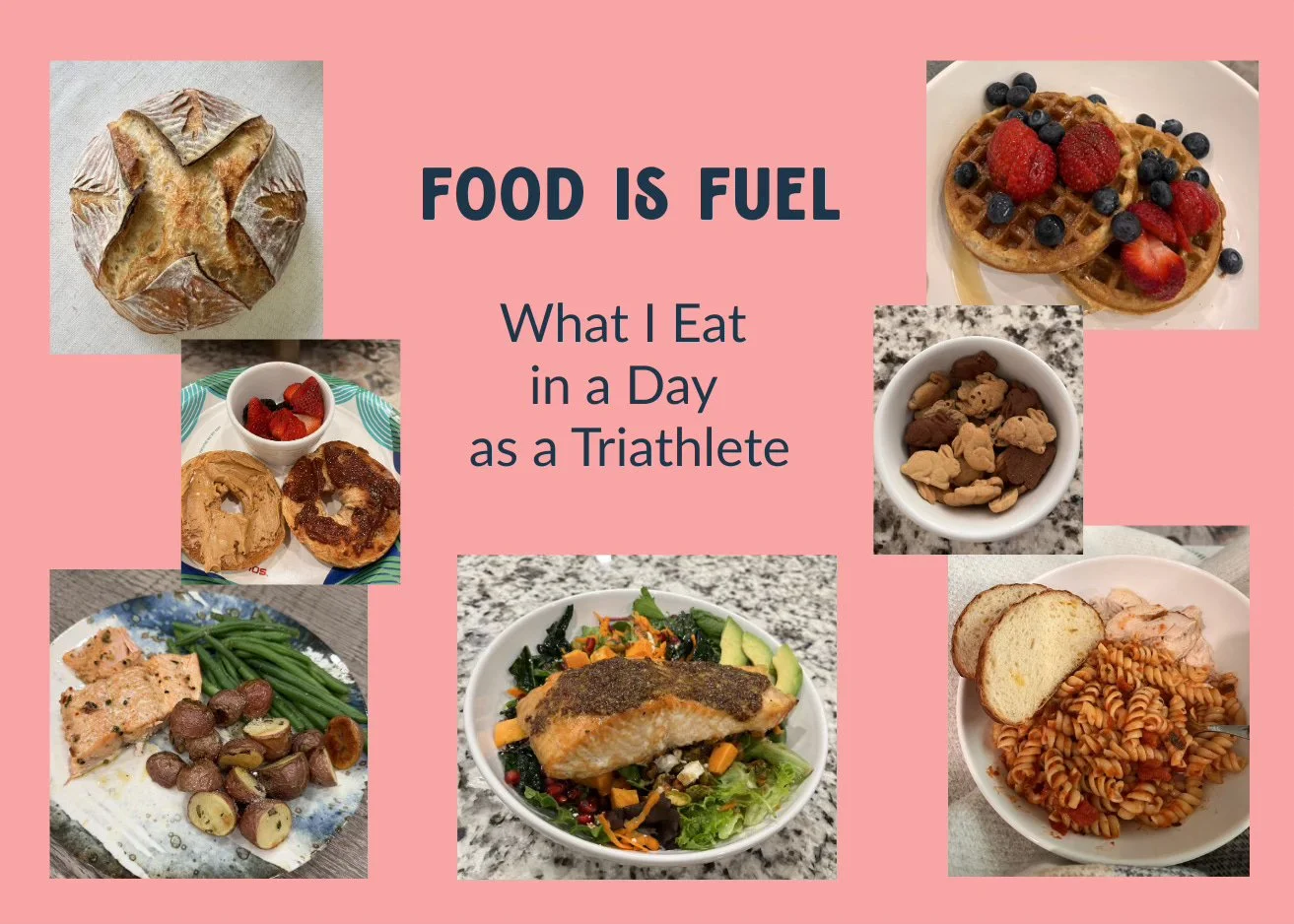
What I eat in a typical day as a long-course triathlete
So, now to the fun part!
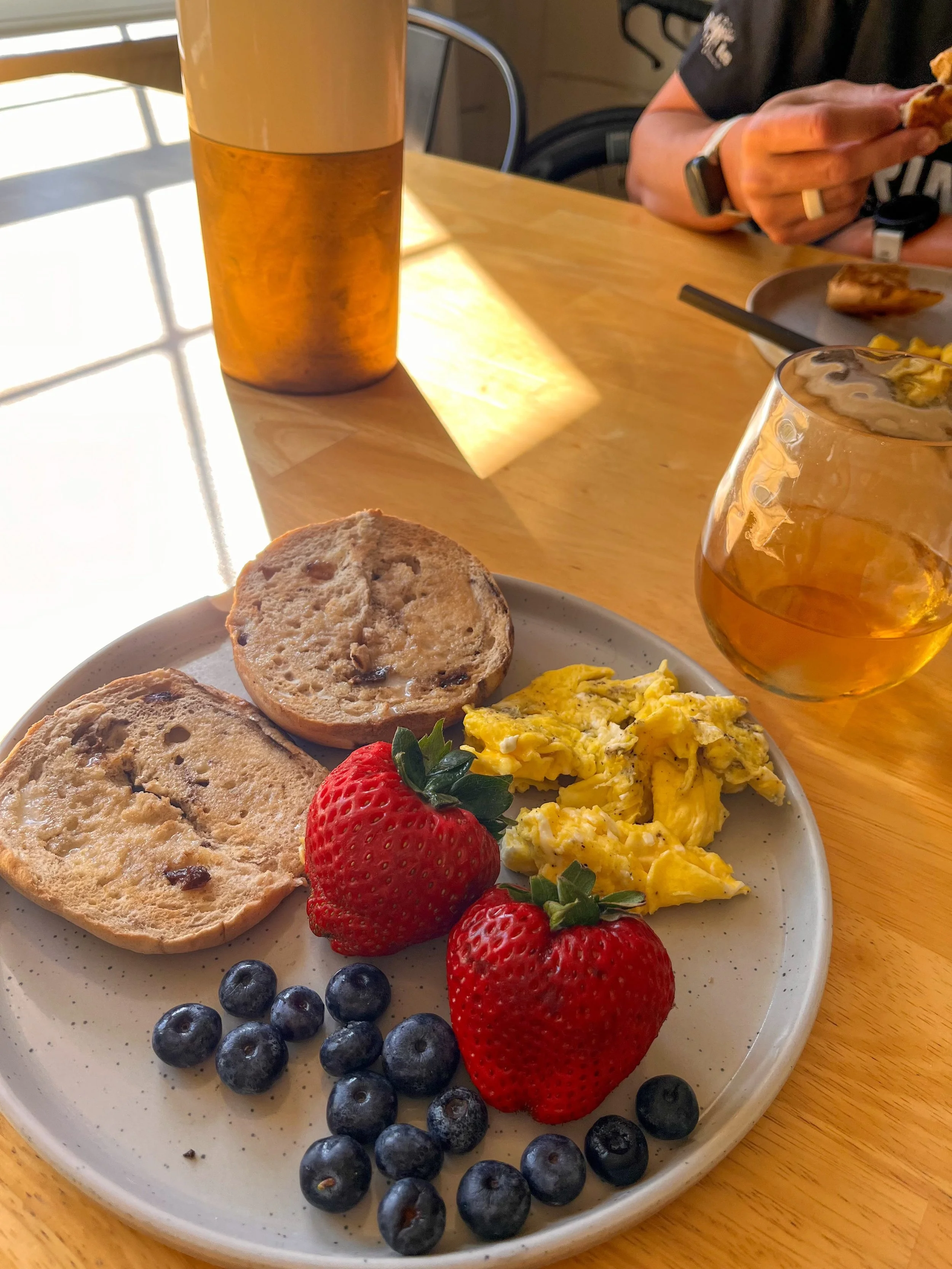
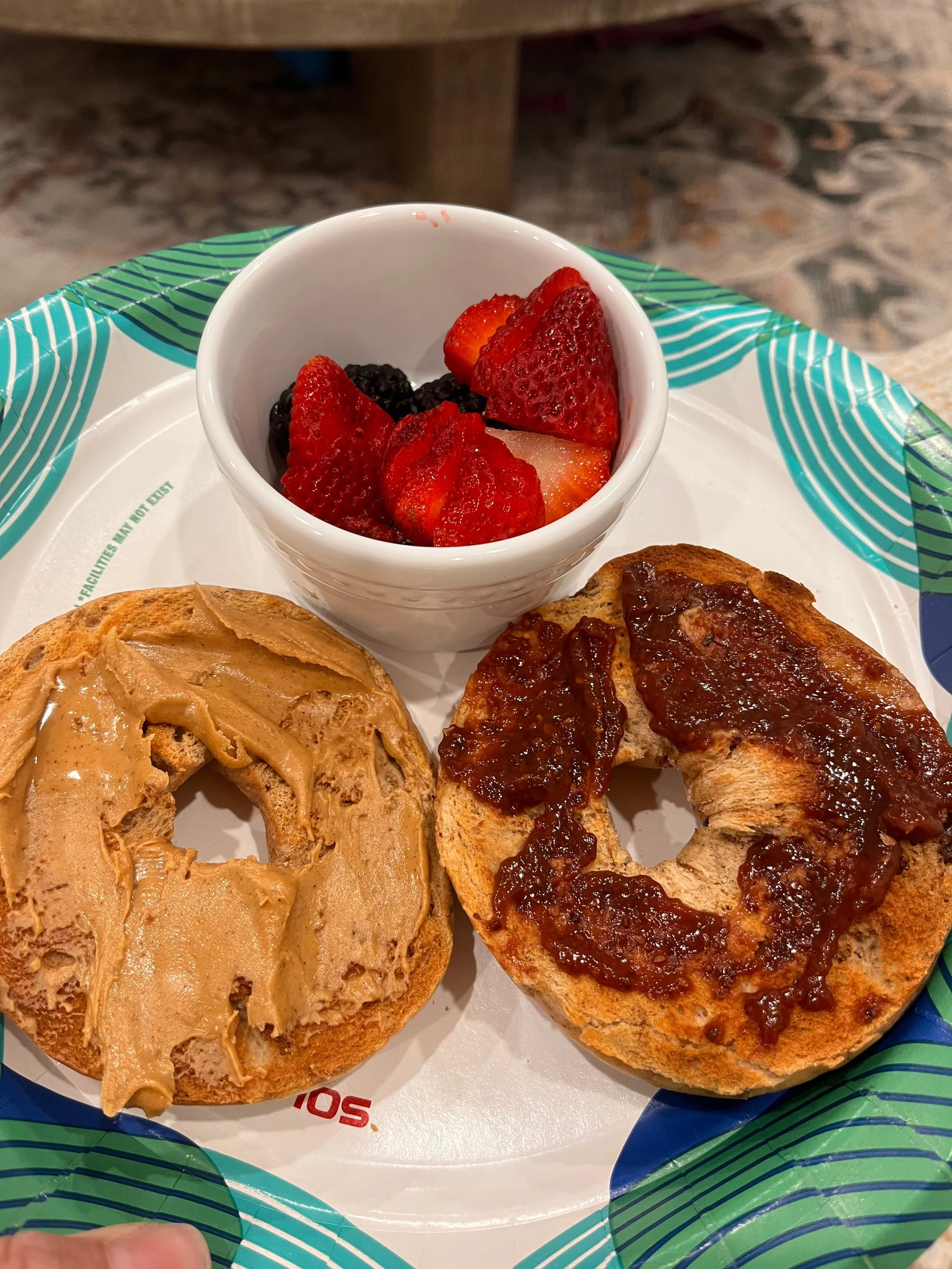
A pre-workout snack is very important, and that’s separate from your “breakfast.” So, if I have a bike ride or run in the morning, I eat a bagel with butter and a glass of water before my workout.
Then, post-workout, I will need to eat a meal and/or protein shake, depending on the length and intensity of the session. Also, if I have two workouts back-to-back, that changes what I eat slightly, because I will need a snack in between.
For example, if I have a 3,000y swim, followed by a 1:20 min. run, here’s what I would eat.
Pre-workout snack- bagel with butter and glass of water
Swim- Fuel with 30g carbs and electrolytes in 20 oz. bottle on deck
Post-workout snack- Cheerios and a banana on the drive home, finish bottle of carbs
Run- 40g carbs per hour, 20 oz fluid in my run bottle, maybe a gel
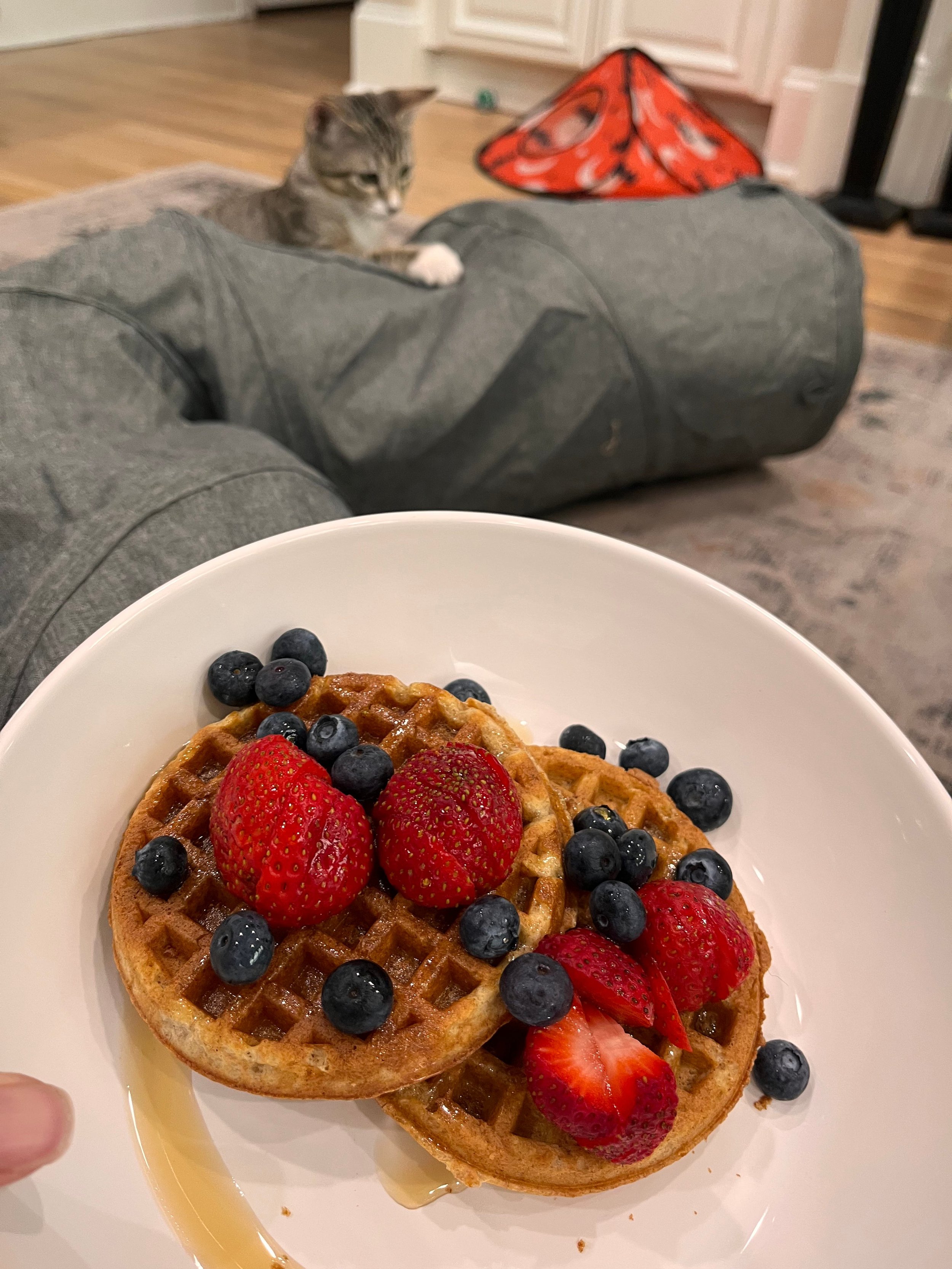
Post-workout- Because I was working out for 2+ hours, I would have a protein shake (Ultragen with 60g carbs, 20g protein) and a meal, probably waffles with syrup and berries
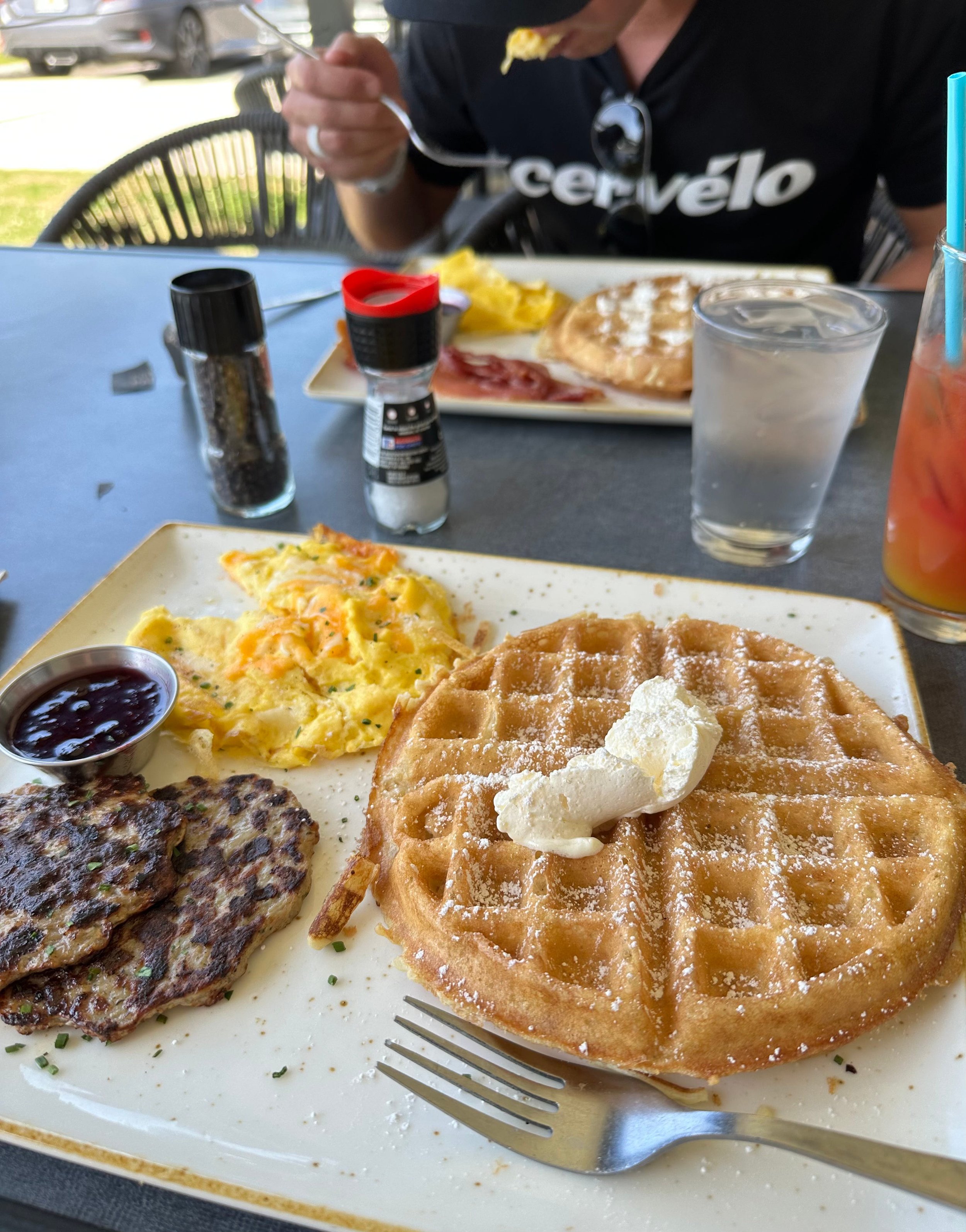
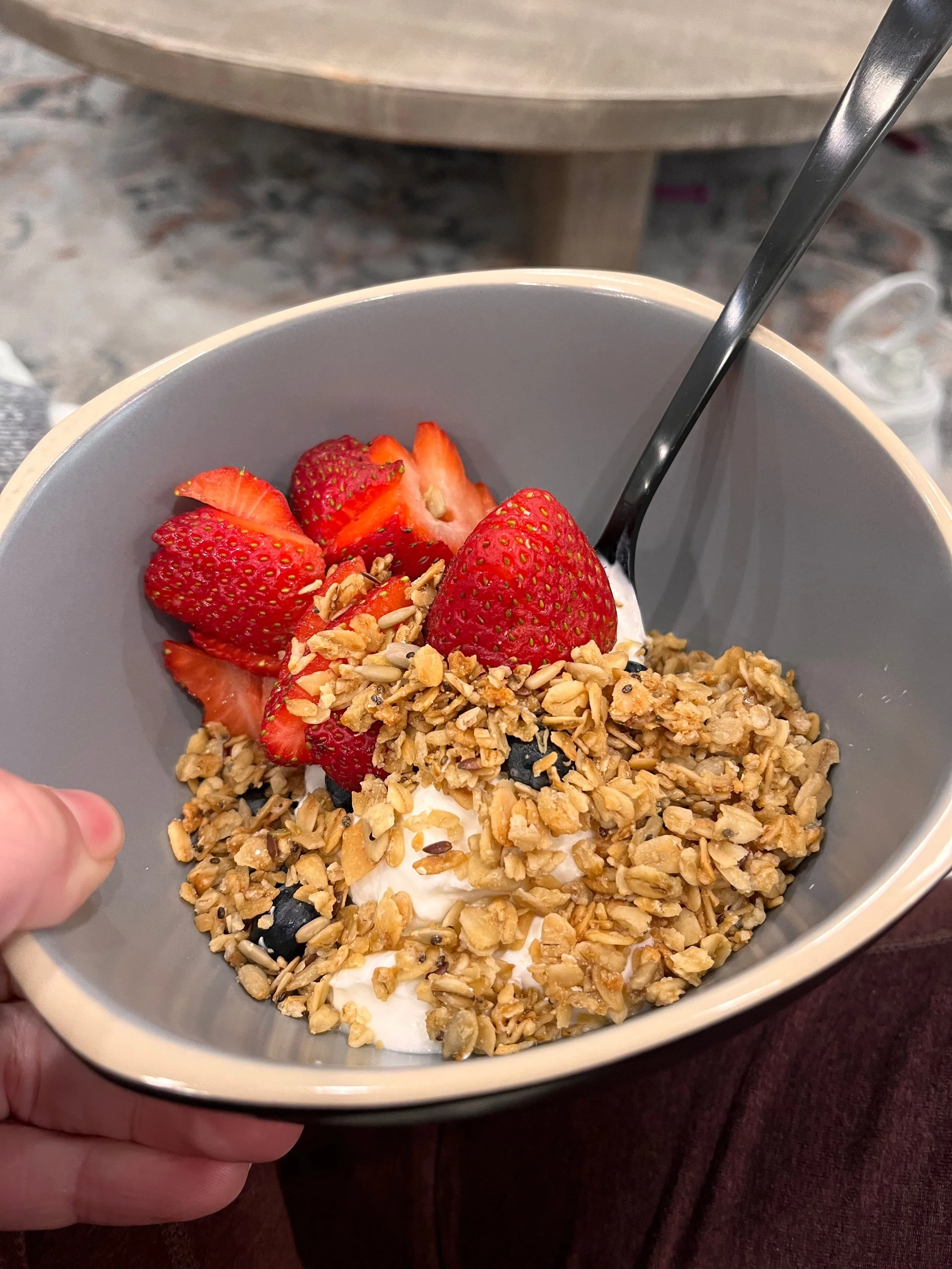
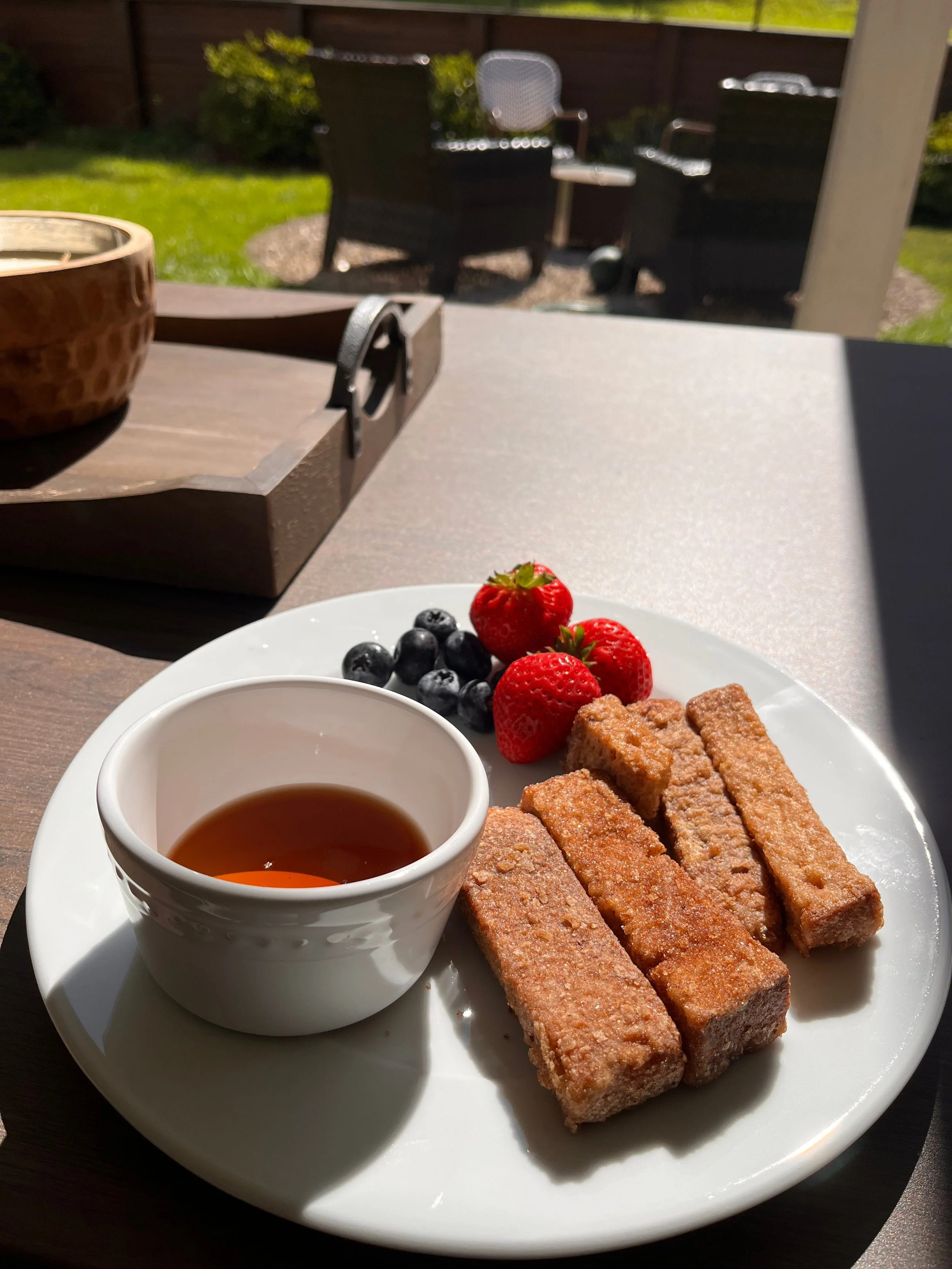
Let’s look at another day. What about a 1:20 bike ride, followed by a 20 min. run?
Pre-workout snack- bagel with butter and glass of water
Bike- 60g carbs in bottle, plus a bit of an extra bottle for the last 20 min.
Run- 10.5 oz bottle with 25g carbs
Post-workout- Because this workout wasn’t as long or intense, I would choose my other protein shake (Orgain, which has less carbs at 15g, but 21g protein) and then have overnight oats with greek yogurt, almond milk, apple, honey, and granola.
Great breakfast options include overnight oats, waffles, French toast, eggs, yogurt with berries and granola.
Here’s the recipe we use to prep overnight oats in mason jars for the whole week.
Overnight Oats
Prep these on a Sunday and you have breakfast ready to go for the entire week! We use mason jars. You can eat it cold or heat it up for about 1:40.
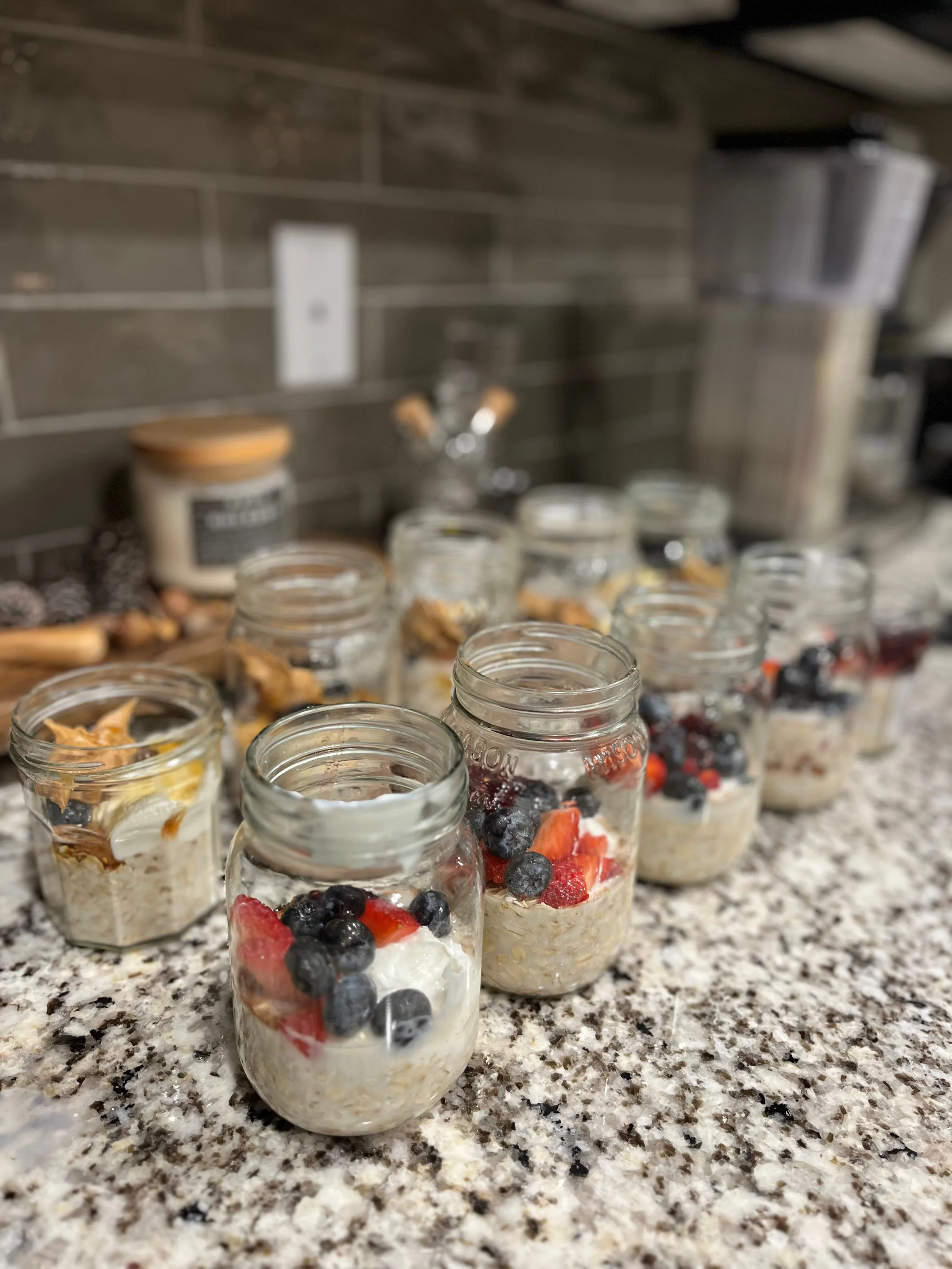
Prep time- 10 min
Total time- 10 min
Serves- 2 athletes, 5 breakfasts each
Ingredients
1/2 cup rolled oats
1/2 cup almond milk (we use Silk)
1/4 cup Greek Yogurt (we use Chobani vanilla)
Squeeze of honey
1/4 tsp vanilla
Dash of cinnamon
Optional toppings: strawberries, apples, blueberries, peanut butter, chocolate chips, granola
Preparation
Step 1- Mix everything together in mason jars and store in the fridge.
Step 2- Add granola on top prior to eating.
Step 3- Heat up in the microwave for 1:40 or eat cold.
Lunch
Honestly, this varies based upon whatever leftovers we have from the night before, or if we’ve meal-prepped my lunches. We meal-prep Matt’s lunches for work. This typically includes grilled chicken, rice, and a vegetable like green beans.
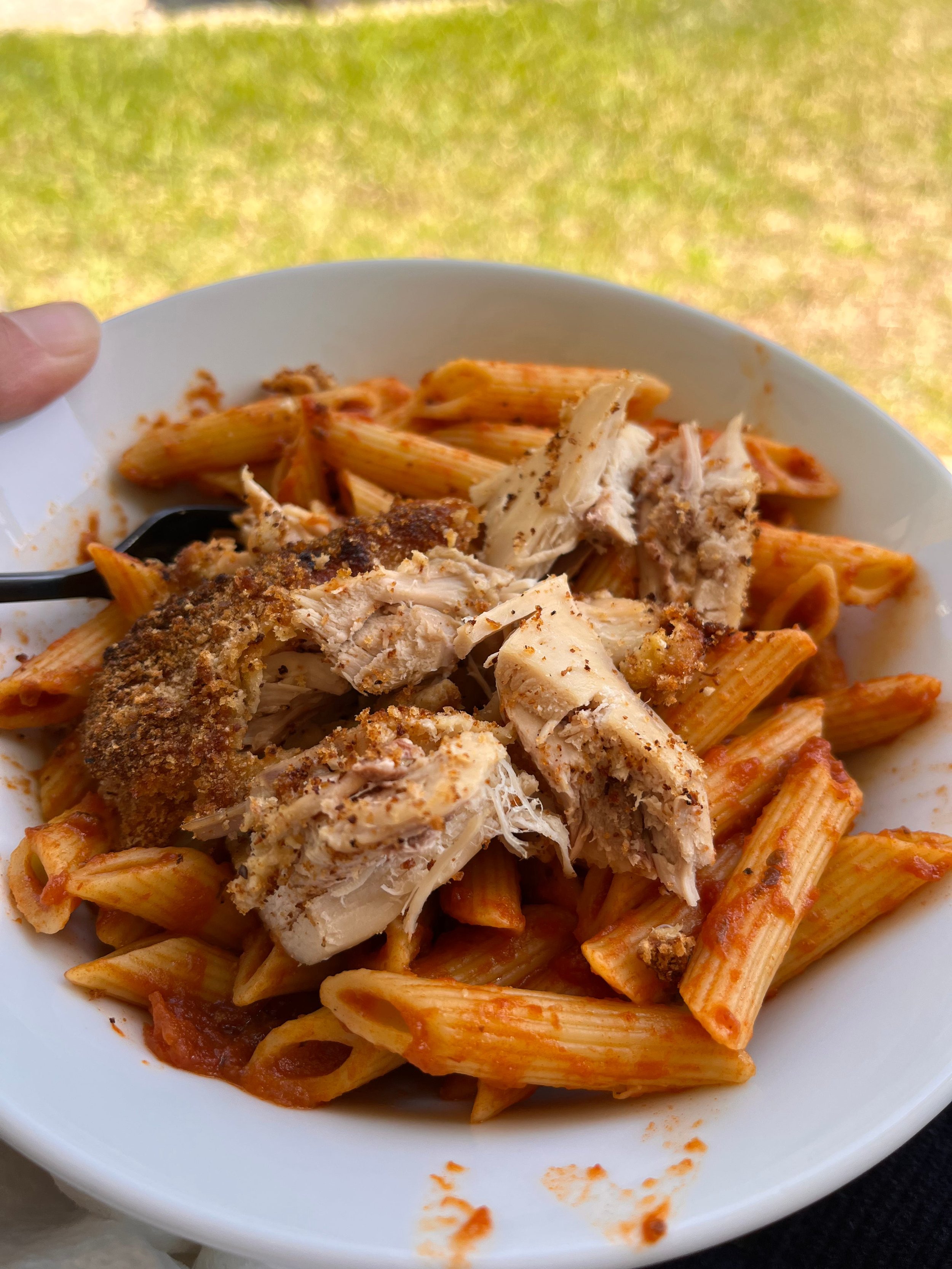
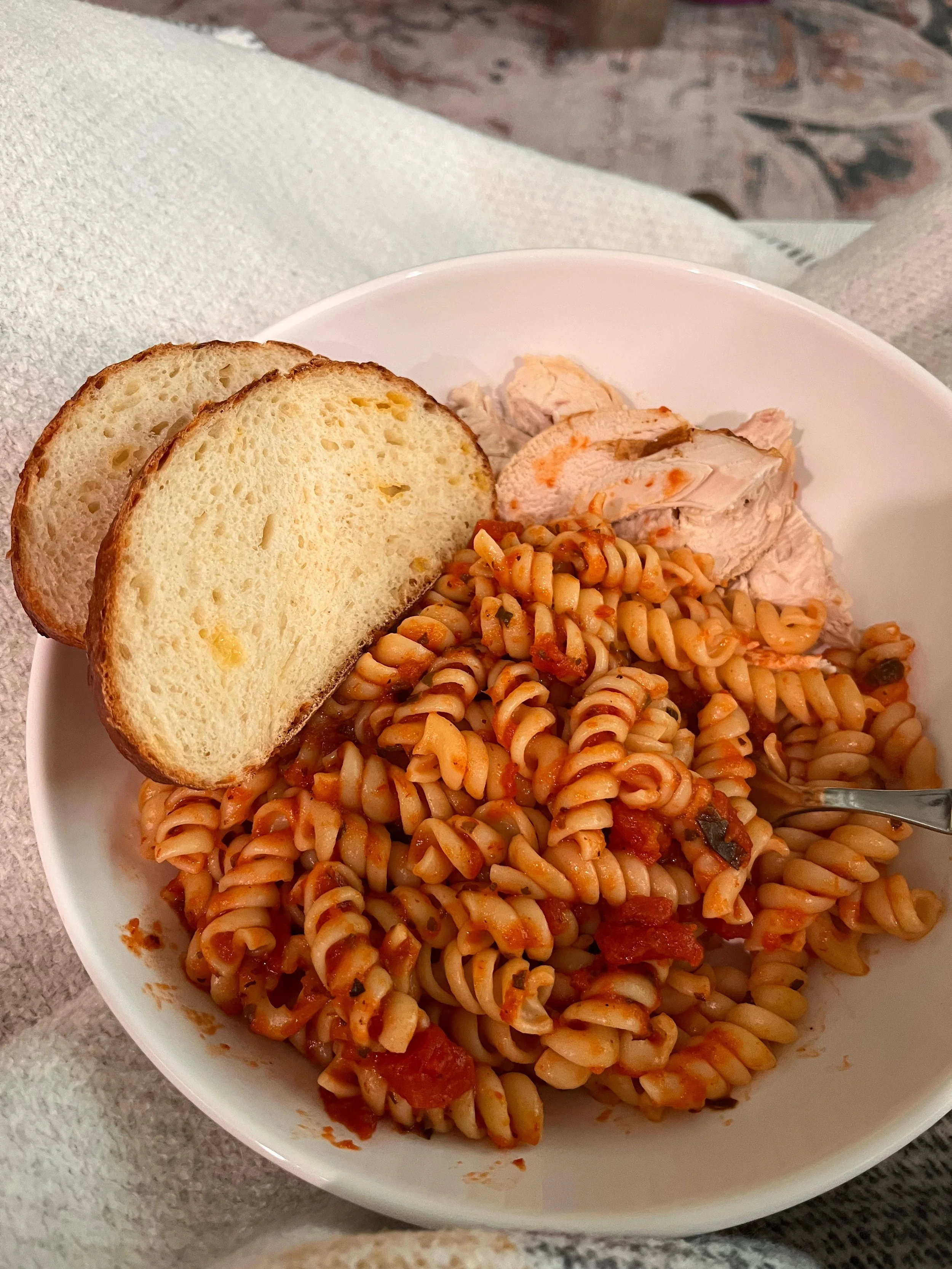
I tend to have pasta with chicken and bread, a grain bowl with protein and salad, or leftovers. A great quick meal option is to pick up a rotisserie chicken from Costco or Publix and use it to create other meals. You can add it to pasta, salad, tacos, sandwiches, quesadilla, etc. Also, Costco has an amazing grain salad with bulgar, chickpeas, kale, cabbage, almond, celery, and cranberries. I can eat that for a week!
Snack
Do not skip your afternoon snack! I haven’t been doing the best job with this lately, since I’m eating lunch around 2 pm, but it’s super important to make sure you get in enough carbs a day.
Great snack options include pretzels with hummus and some popcorn, an apple with string cheese and peanut butter, or animal crackers with yogurt and dried fruit or applesauce. Also, don’t be afraid of some processed foods, as it provides a quick and convenient way to get the carbs you need in a small package. Bobo’s bars are great too. For processed foods, I try to aim for labels with less than 4.5g of fat.
Dinner
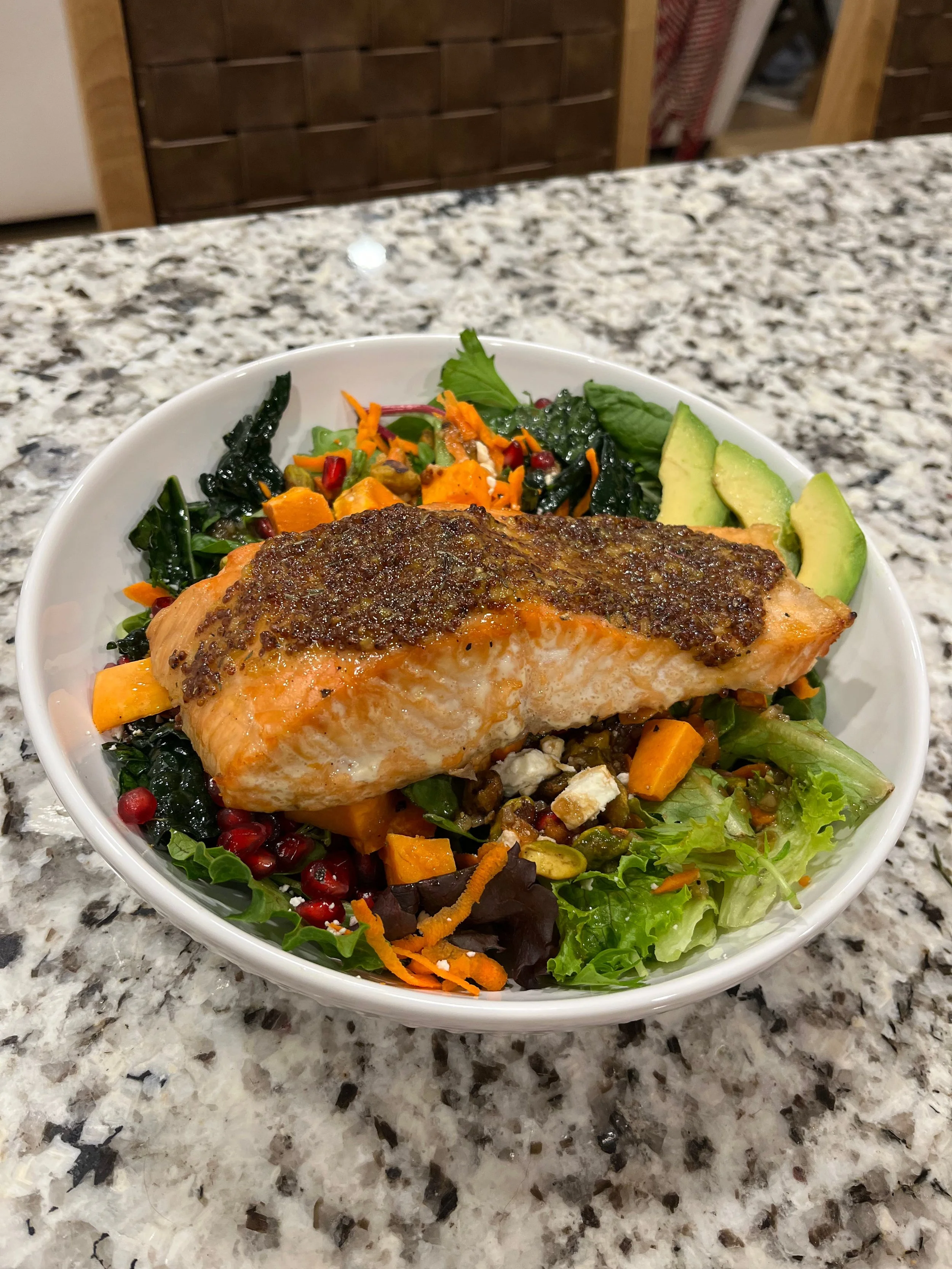
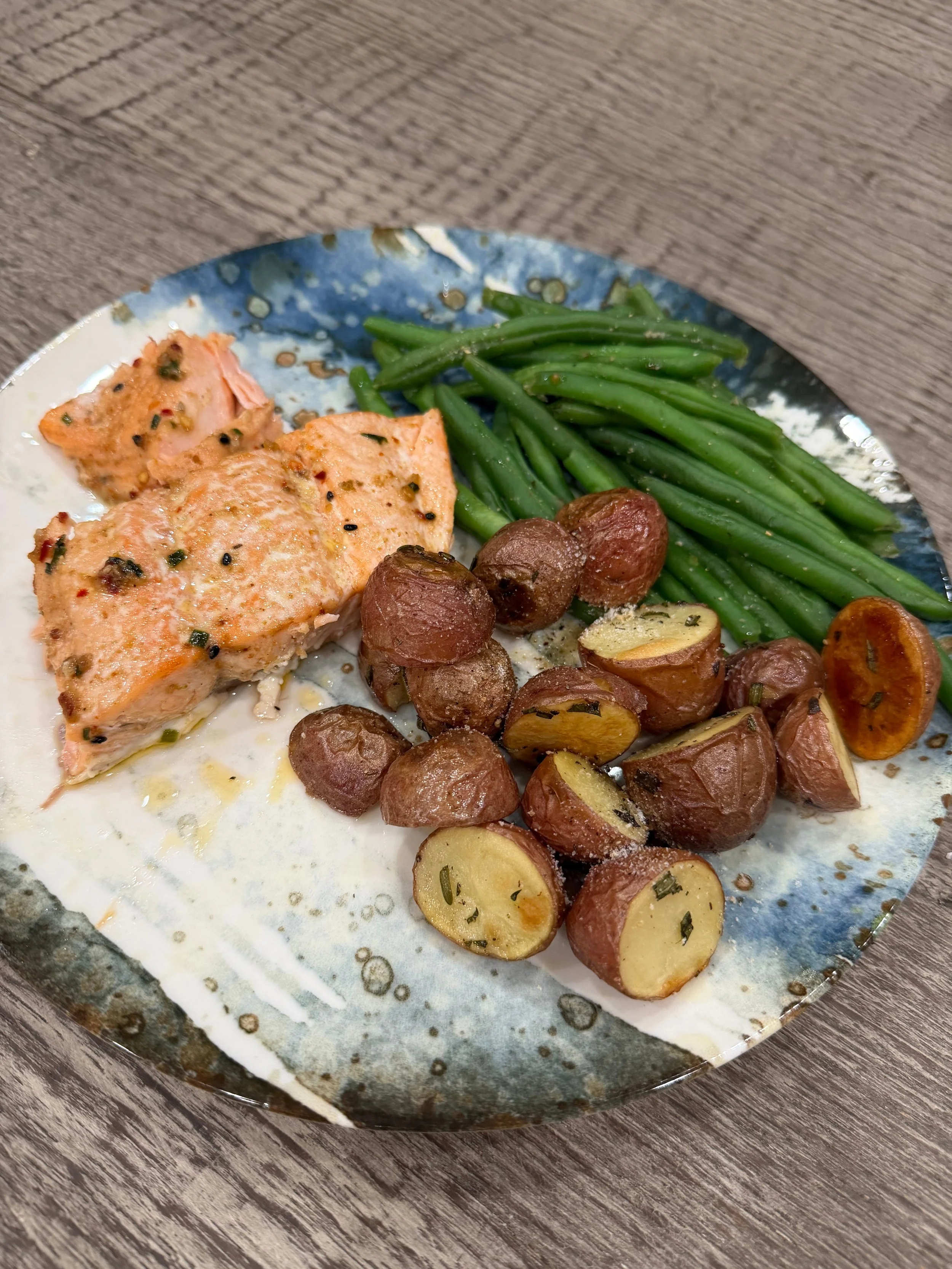
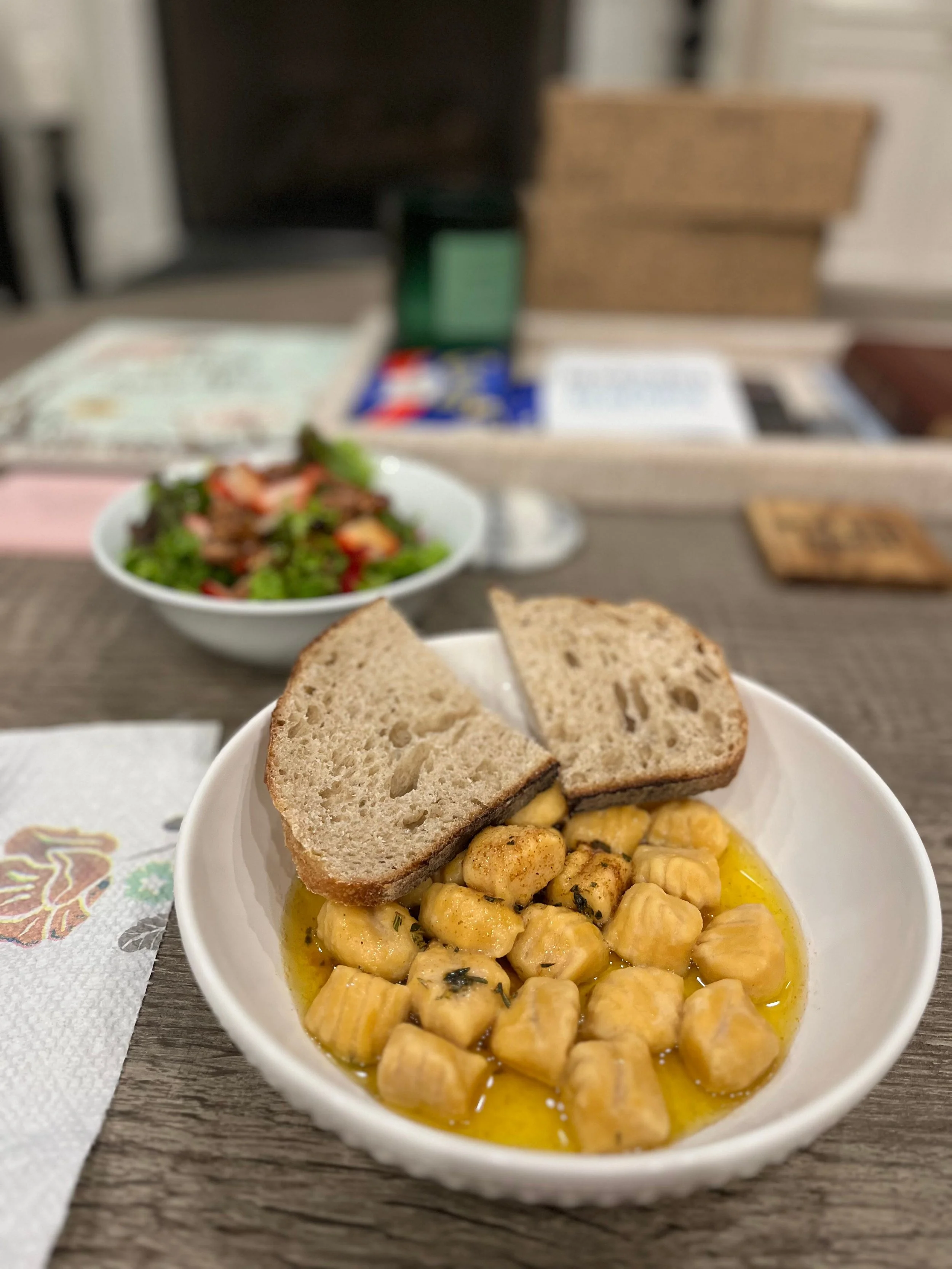

For dinner, our meals include some type of lean protein, like chicken, turkey, or salmon, with carbs and vegetables. Matt loves sourdough bread and we eat it with almost every meal. Sourdough bread is great because it has a lower glycemic index so it doesn’t spike your blood sugar as much, and it’s carbs!
Another easy way to get carbs in dinner is with pre-packaged mashed potatoes, roasted sweet potatoes, or pasta. Most of our vegetables come at dinnertime, simply because it’s easier to cook then. We like peas, broccoli, zucchini, green beans, kale, spinach, cabbage, etc.
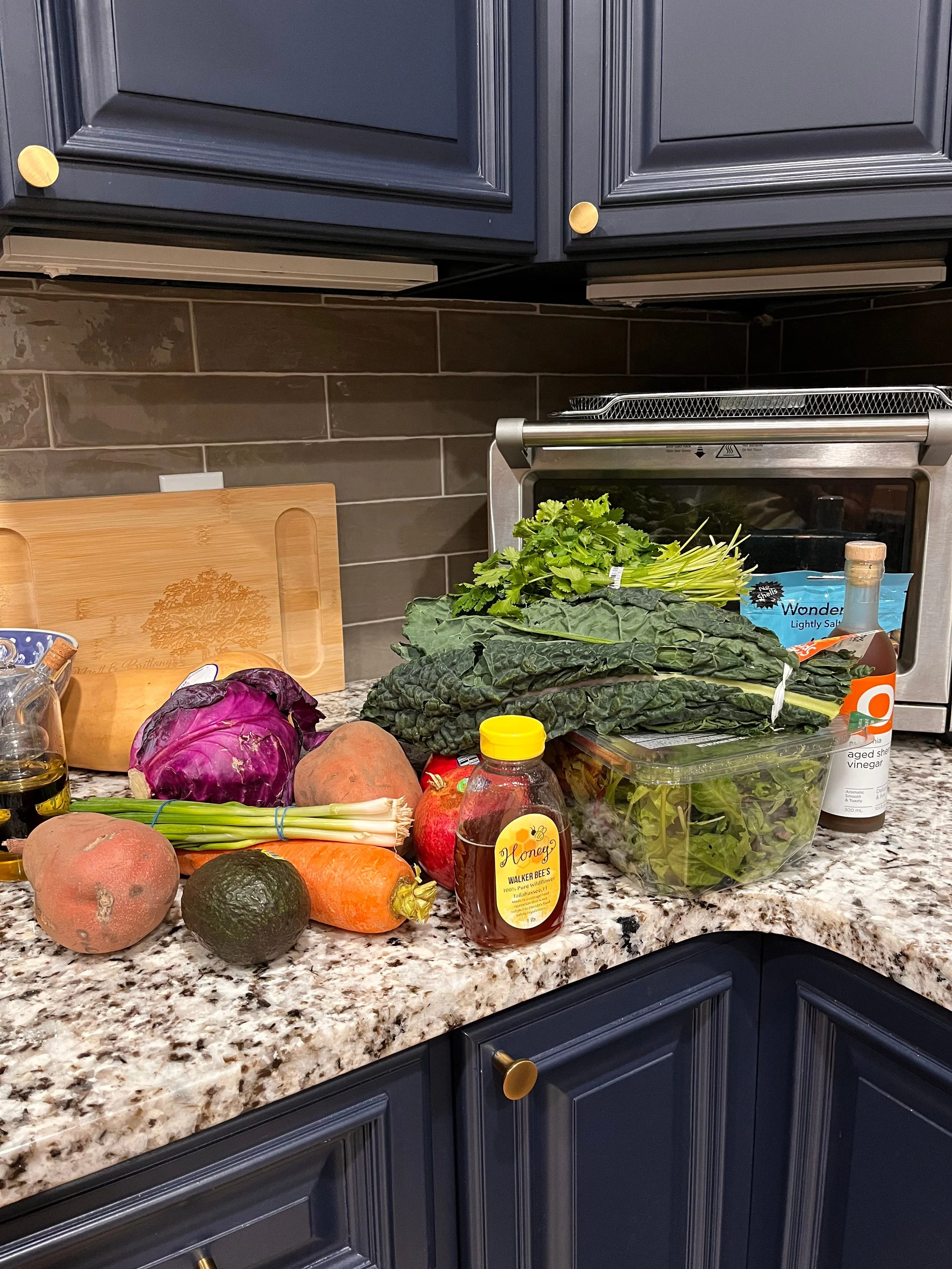
One of my favorites is a winter Spanish salad (pictured above) that we make with roasted sweet potatoes, cilantro, avocado, kale, pomegranate seeds, pistachios, scallions, and feta. We top it with air-fryer salmon with a brown sugar, mustard glaze.
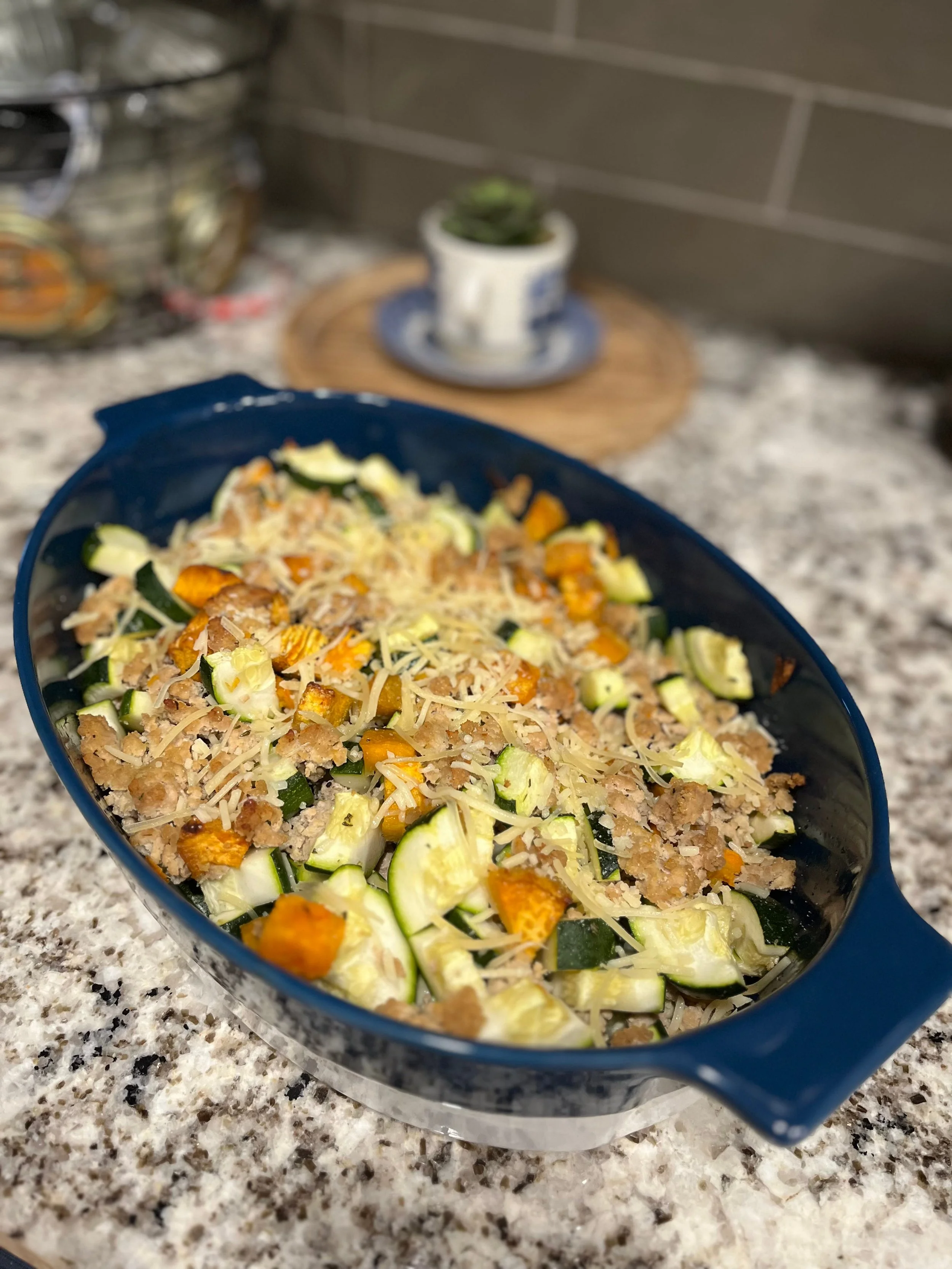
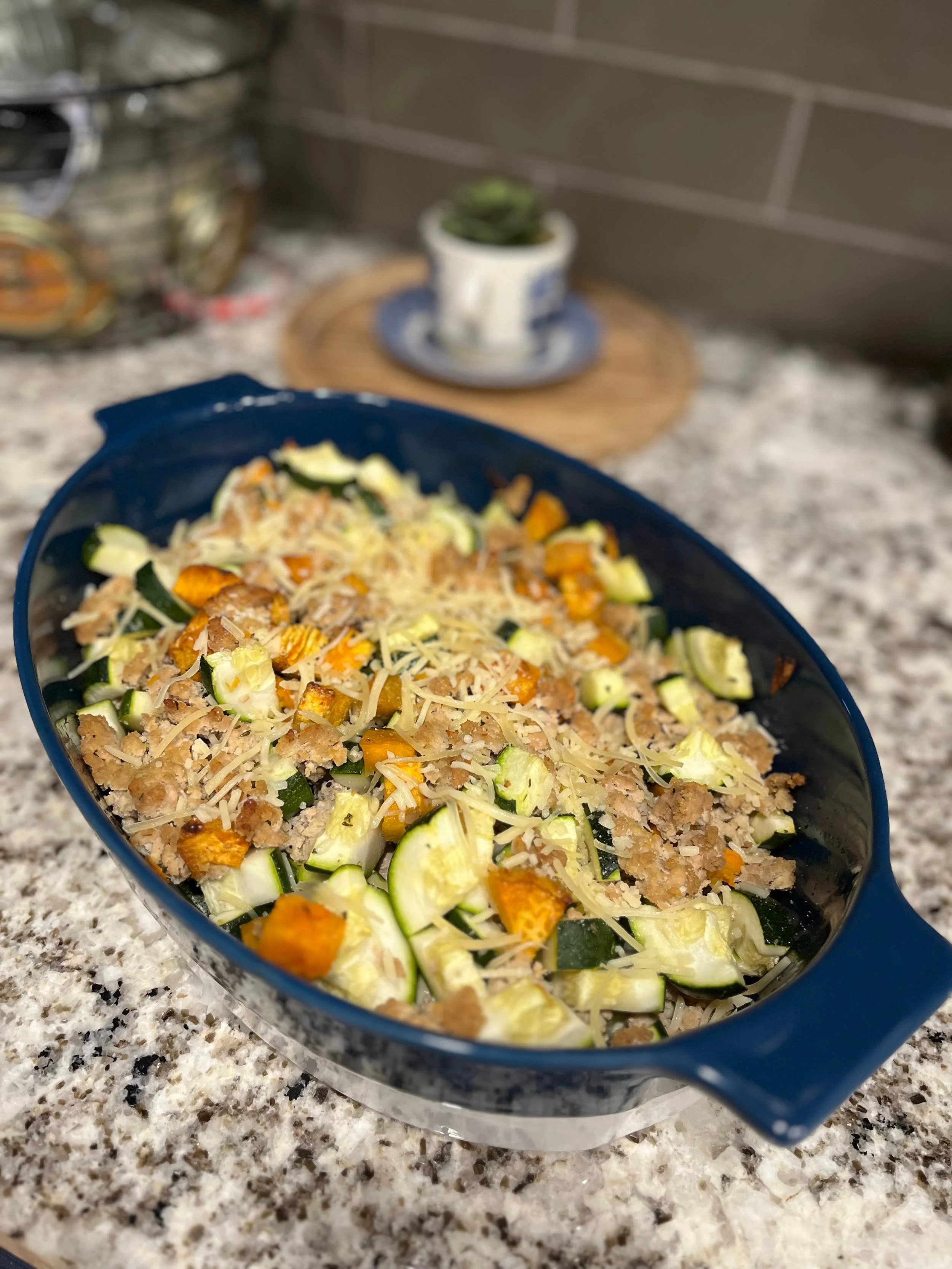
Here’s a recipe for my go-to dinner and meal-prep option, courtesy of my friends Claire and Mack. I consider this to be the perfect meal! It has lean protein, carbs, vegetables, and a little fat.
Turkey, sweet potato, zucchini bake
This is a quick and easy dish to make for dinner and heats up great, so you can use the leftovers for meal-prep. And it's SO good!
Prep time- 25 min
Cook time- 40 min
Total time- 1 hour 5 min
Serves- 8
Ingredients
1 package of turkey
3 sweet potatoes
2 zucchini
Grated parmesan cheese
Onion powder
Garlic powder
Salt and pepper
Rosemary
Preparation
Step 1- Set oven to 400 degrees.
Step 2- Peel and chop sweet potatoes into bite-size pieces. Put in large baking dish and top with 2 tbsp olive oil, salt and pepper, onion powder, garlic powder, chopped rosemary.
Step 3- Cook for 30 minutes.
Step 4- Brown turkey in pan with 1 tbsp olive oil, garlic powder, onion powder, rosemary, and salt and pepper.
Step 5- Remove sweet potato from oven and add turkey and chopped zucchini. Put back in oven for 10 more minutes.
Step 6- Top with parmesan cheese.
Dessert
Yes, you’re allowed to have dessert! Matt likes Luigis Italian ice from Publix. I’m a fan of cinnamon graham crackers and a square of dark chocolate. Also, Yasso makes some good greek yogurt based ice-cream bars.
I hope this helps give you an idea about what it takes to fuel training for long-course triathlon. We currently do more 70.3 distance, but when we train for full Ironman, we have to be very cognizant about eating multiple snacks a day to get in enough of the nutrients we need to support that level of training.
But regardless of the distance, you will train better, recover better, perform better, and feel better, if you remember that food is fuel! (and carbs are your friend)