

How to Use a Tune-Up Race to Start Your Season Strong: Gate River Run 15K Race Report
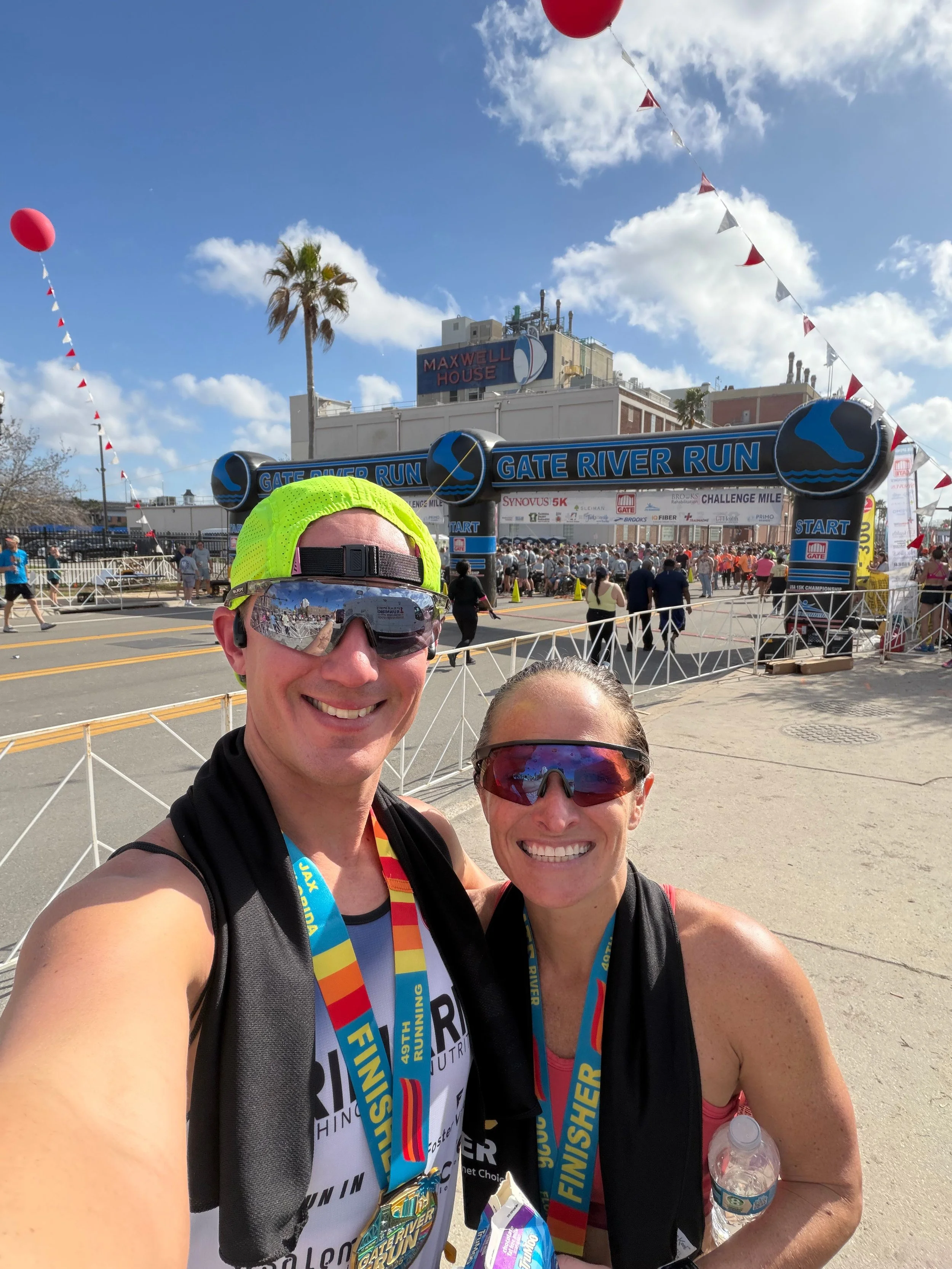
The start line at the Gate River Run 15K is unlike anything you’ve experienced before.
More than 20,000 runners crowd the streets underneath a massive American flag that marks the start line. The energy is electric, and you’re bound to see some crazy, inspiring, and downright weird things along the 15K route that takes you into Jacksonville neighborhoods, along the river, and over the infamous “Green Monster” bridge.
But at this race, I wasn’t there to chase a personal best. I was there for something more valuable: a tune-up race. The goal wasn’t to achieve a specific finish time—it was to shake off the rust, test our fitness, and practice race execution.
I did this race several years ago, but Matt never has. Since it was his birthday, (yay 39!) we thought it would be a fun trip and a great opportunity for a tune-up race before the triathlon season begins.
Birthday Trip to Jacksonville!

Pre-race! 15,385 runners in the 15K, 21,200 across all races.
Matt’s birthday was on Friday, so after work, we hopped in the car and drove 2 1/2 half hours from Tallahassee to Jacksonville. Thankfully, Matt got us a room at a hotel that literally overlooked the start line, so it was an easy 5-minute walk on race morning.
(Interestingly enough, we actually got more sleep the night before the race than we did on Friday- a regular training day! The race started at 8 am, and with triathlon we’re used to much earlier start times.)
Still, we always aim to arrive at a race one hour ahead, so we have time to warm-up and get settled. This was even more important at Gate River, because we needed to pick up packets, and there are thousands of athletes everywhere, making navigating through crowds a bit difficult.
Also, something to keep in mind at this race (as well as Ironman triathlons) is the start process with self-seeding. Because there are so many athletes at Gate River, you start in waves. We submitted a qualifying time so we could start in the wave after the elite athletes, which is helpful because you get out of most of the traffic and get on course sooner.
(At IM races, the goal is to start the swim soon as reasonably possible, because it eliminates some of the congestion on the bike course, and you get on the run sooner, which is a big consideration at hot races.)
Speaking of hot races… Gate River was HOT. I was hot. Other runners were hot. Spectators were hot. The road, air, my body, face, and literally the entire world was hot. Did I mention it was hot?
This wasn’t entirely unexpected, but we’ve experienced cooler-than-normal temperatures in Tallahassee this winter, so we’re about 0% heat-acclimated at this point. Therefore, 95% humidity felt particularly brutal.
Quick science lesson for athletes:
The race start was 66°F with 95% humidity. At that humidity level, the air is almost completely saturated with moisture, which means your sweat doesn’t evaporate, which means it’s very hard to cool yourself, which means your RPE is high and performance suffers. Once the sun came up, it got into the mid 70°Fs. So, 75°F with 95% humidity means a feels like temperature of 84°F. When looking at weather, pay attention, not just to the air temp, but also humidity, dew point, and feels like temp.
By mile 2, I was completely soaked, so I knew the day would be about managing the heat the best I could. This meant dumping water over my head at aid stations and running based on RPE (rate of perceived exertion) instead of pace. Ultimately, it doesn’t matter what the number on your watch says. If you’re running at 80%-90%, that’s all you have to give.
My new book- The Complete Guide to Your First 70.3 Triathlon- is live! Grab your copy here. (Paid subscribers get 20% off.)
Tips for Racing in the Heat:

Photo Credit: The Florida-Times Union
At hot races, your heart rate will climb faster, perceived effort will be higher, and your pace might be slower, even if your fitness is good. Chasing a specific pace can easily turn into a survival mission (as evident from the number of runners we saw getting picked up by ambulances).
Start out easier than you think. You can always run faster toward the end, but once you cross over into overheating, it’s almost impossible to come back.
Run based off words, percentages, and questions, instead of numbers. So, is this a strong effort? Is this 85% Can I sustain this for an hour?
Cool yourself at every aid station with water on the head and ice in your kit (Gate River didn’t have ice, sad.)
Pay attention to breathing, especially an extended exhale.
Carry your own hydration. A few sips at an aid station just won’t cut it in these conditions. During every training session and race, we carry our own hydration. And by carry, I mean keeping a bottle on your body in a run belt. (I love the Naked run band).
Honestly, this course felt a bit hillier than I remember, but that could’ve been the heat talking. The first mile goes up and over the blue bridge with grates. It’s a bit disconcerting when running fast, because you don’t want to get your toes stuck. We traversed the bridge without harm and headed out to the portion that winds its way through Jacksonville neighborhoods. (By this time, I’d already seen two Ironman buddies.)
If you’ve never been to Gate River, it’s essentially a massive block party. People sit on their front steps, put couches out on the lawn, and set up unofficial aid stations to offer drinks and snacks. There are live bands almost every mile and even more music playing from speakers set up by spectators. It’s really quite amazing how Jacksonville has embraced this race over the past 49 years. I ran by three people offering to spray runners down with hoses, spectators with signs, a disco ball, an inflatable cheetah, and that’s just the spectators.
You also see really weird things on course… I saw several runners wearing butterfly and ladybug wings, running in full-length skirts, and a man wearing a kilt and rhinestone-encrusted shoes. There were runners doing shots of fireball, taking jello shots, and drinking vodka. (Likely some of the folks who were regretting their decisions toward the end of the race).
I saw two runners picked up by medical personnel and another that collapsed on the bridge. I overheard a mom telling her daughter not to take that water because it wasn’t water! (It was vodka.) I saw a teeny, 10-year-old dynamo pass me with her Ironman mom just before the bridge (go tiny human go!)
For the most part, I was pleased with how consistent my run was in these conditions. Ran into a bit of a rough patch at mile 7 and started getting chills at mile 8 (signs of heat stress) but I was able to rebound for the finish.
Matt met me at the finish line, and he snagged a few PRs along the way. We both got top 10% hats that are apparently a coveted thing? People were talking about them during the race. Honestly, I was just happy to have four water bottles to pour over my head at the finish and sit in the shade.
Triple Threat Life is a reader-supported publication. Join the TTL Club and get a FREE Tri Smarter, Not Harder e-book, a dozen partner discounts, bonus members-only articles, video tutorials, and access to our monthly expert webinars. Just $5 a month. Join here.
My 3 Goals For the Race
My coach suggested I set three process goals for this race. Process goals are different than outcome goals, because they don’t focus on times, results, or placings. Instead, process goals focus on the steps you need to take to have the best race you can.
Here were mine.
#1- To be patient with pacing so I still feel strong on the back half of the run.
(I did well with this, but given the adverse weather conditions, I did not feel strong on the back half of the run and could’ve benefited from an easier start.) 6.5/10
#2- Pay attention to my breathing, especially an extended exhale.
(I’ve been practicing this a lot in training and really focused on it during the race.) 8/10
#3- Focus on my own effort and not get distracted by what other athletes are doing.
(A few times I let my mind stray, wondering- Why is that person wearing butterfly wings? Oh great, a lady running in a full-length skirt is passing me. But I was able to re-focus on my own effort for the most part.) 7/10
Tips for setting race goals
Avoid setting outcome-based goals like times, paces, or results. This often leads to frustration, poor pacing, blowing up, and not reaching your full potential.
Think about the steps you need to take to have the best race you can and form goals based around those things.
Ask yourself questions like:
- What skills do I need to practice?
- What mistakes do I want to avoid?
- What practical steps do I need to take to have the best race I can?
Why every athlete should do a tune-up race
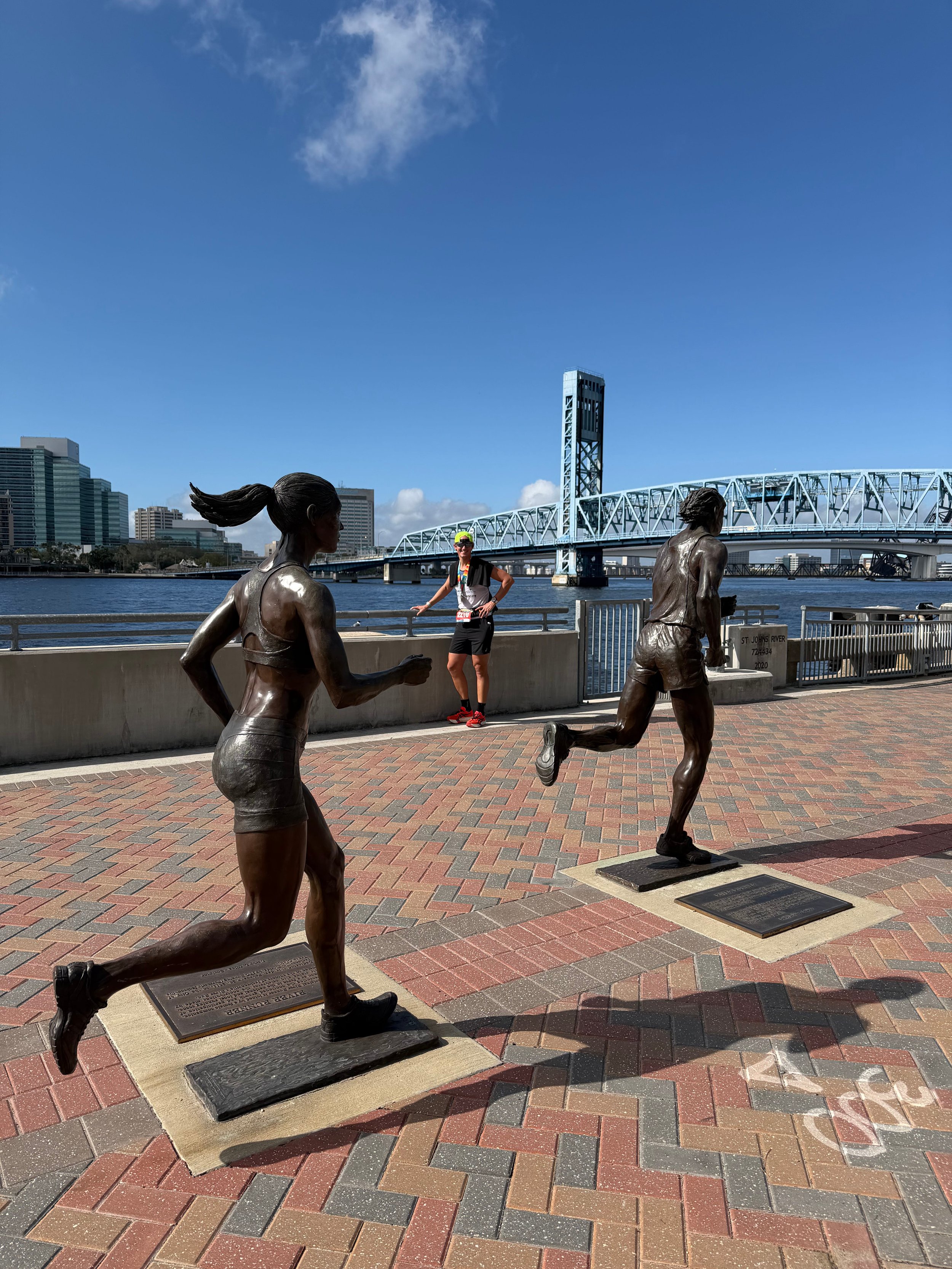
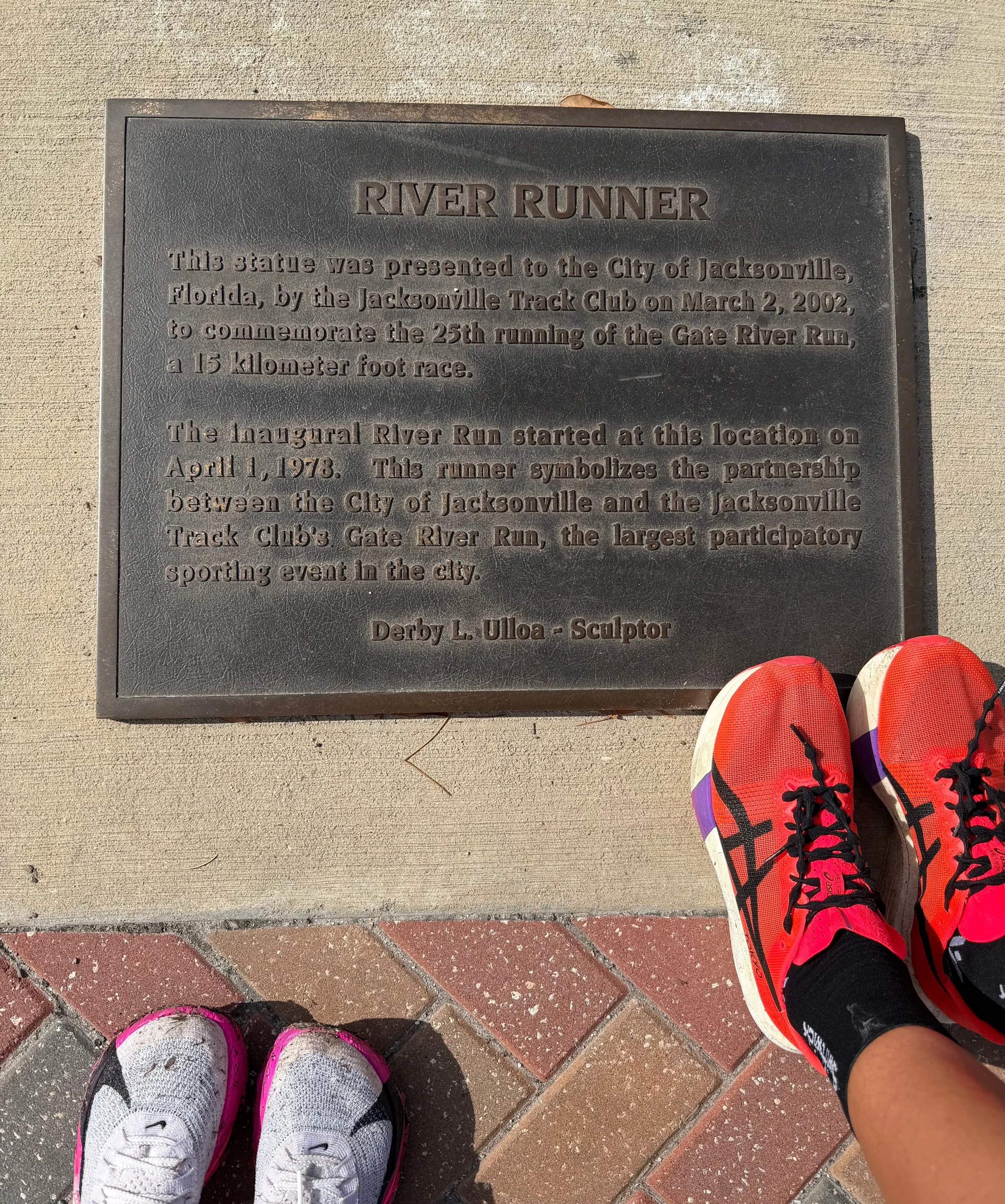
A plaque with statues we found behind our hotel that commemorates the 25th running of the Gate River Run. It started at this location on April 1, 1973. The first bridge we ran over is in the background.
Some people call it a rust-buster, an early-season race, or a tune-up, but it’s basically the same thing. A tune-up race is an opportunity to practice the art of racing again after off-season and to work out the kinks before more important races.
It reintroduces the stress of racing- pre-race nerves, logistics, travel
It allows you to practice all the parts and pieces- pre-race nutrition, fueling, warm-up
It helps you practice pacing and race day execution
It reminds your brain what race effort actually feels like
Depending on the distance, scheduling a tune-up race 3-4 weeks before a key race provides a great opportunity to practice your racing skills. Because no matter how prepared you think you are, or how long you’ve been doing it, every athlete makes mistakes.
And yes, I have examples! When I was packing, for some unknown reason I grabbed my race shoes from the 2024 season instead of 2025… They worked fine, but the 2-year-old shoes didn’t have the bounce I was used to, were a bit worn out, and if my ankles on this morning’s run have anything to say about it, was a poor choice.
Also, my heart rate strap has been acting up over the past few weeks, and during the race it decided to give up completely. So we will need to replace that before our first triathlon of the season.
A tune-up race is a great time to try out new nutrition as well. I’ve been training with a new run nutrition (Amacx) for a few months now, and Gate River was a great time to see how it worked at race intensity.
Training fitness and race execution aren’t the same thing. A tune-up race helps bridge that gap. You want to try new things and make mistakes before your goal race. That’s what a tune-up race is for.
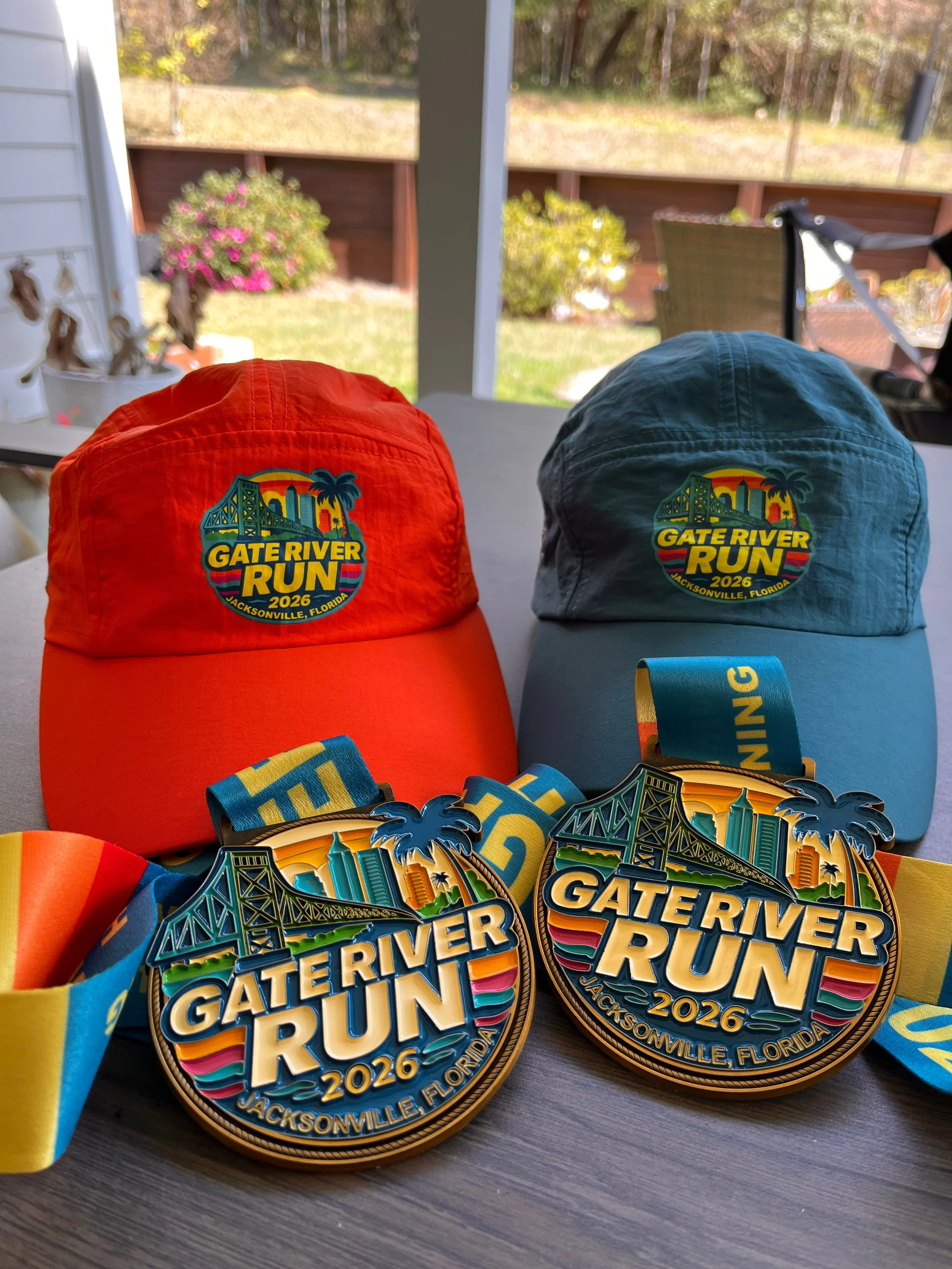
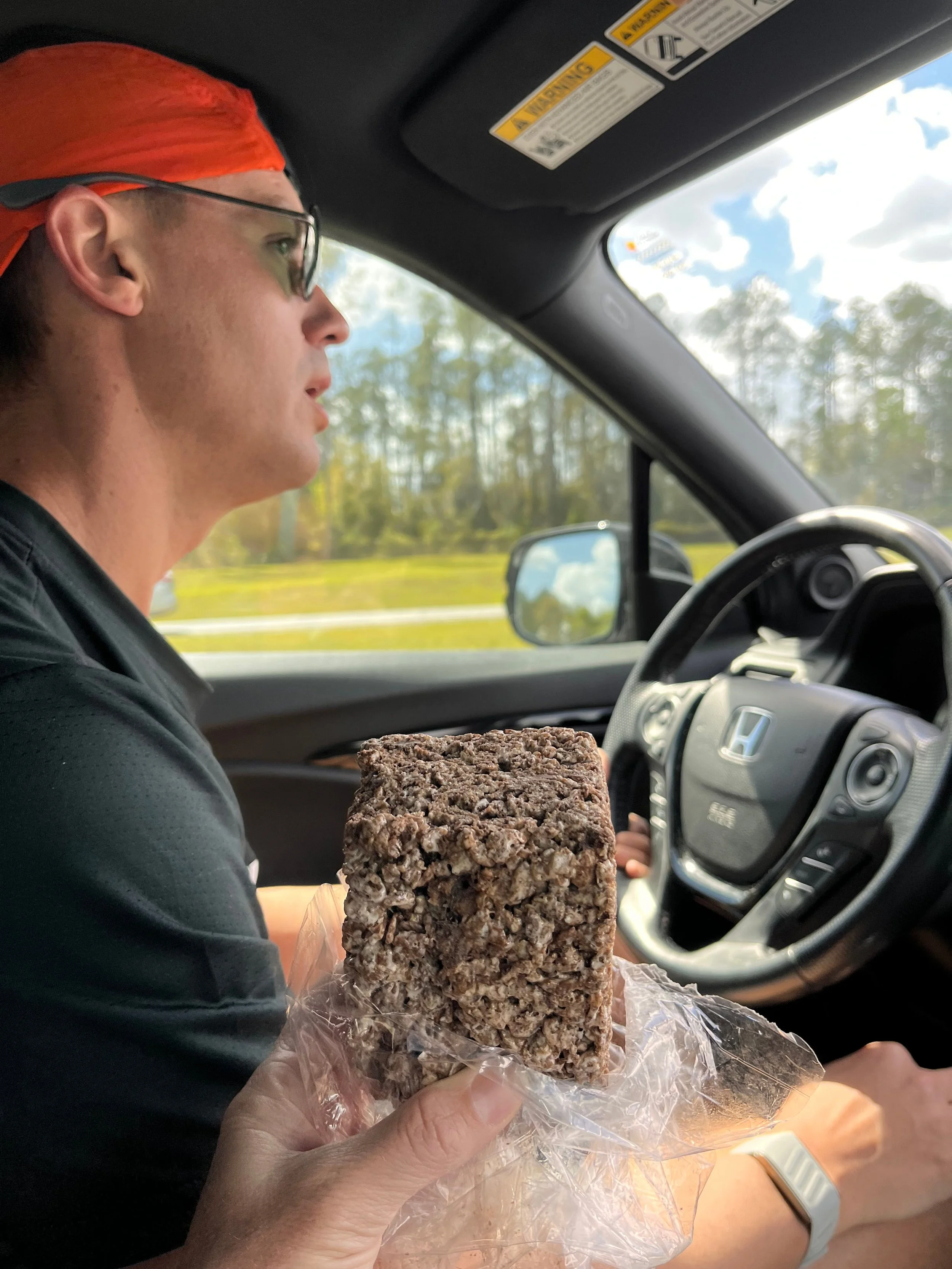

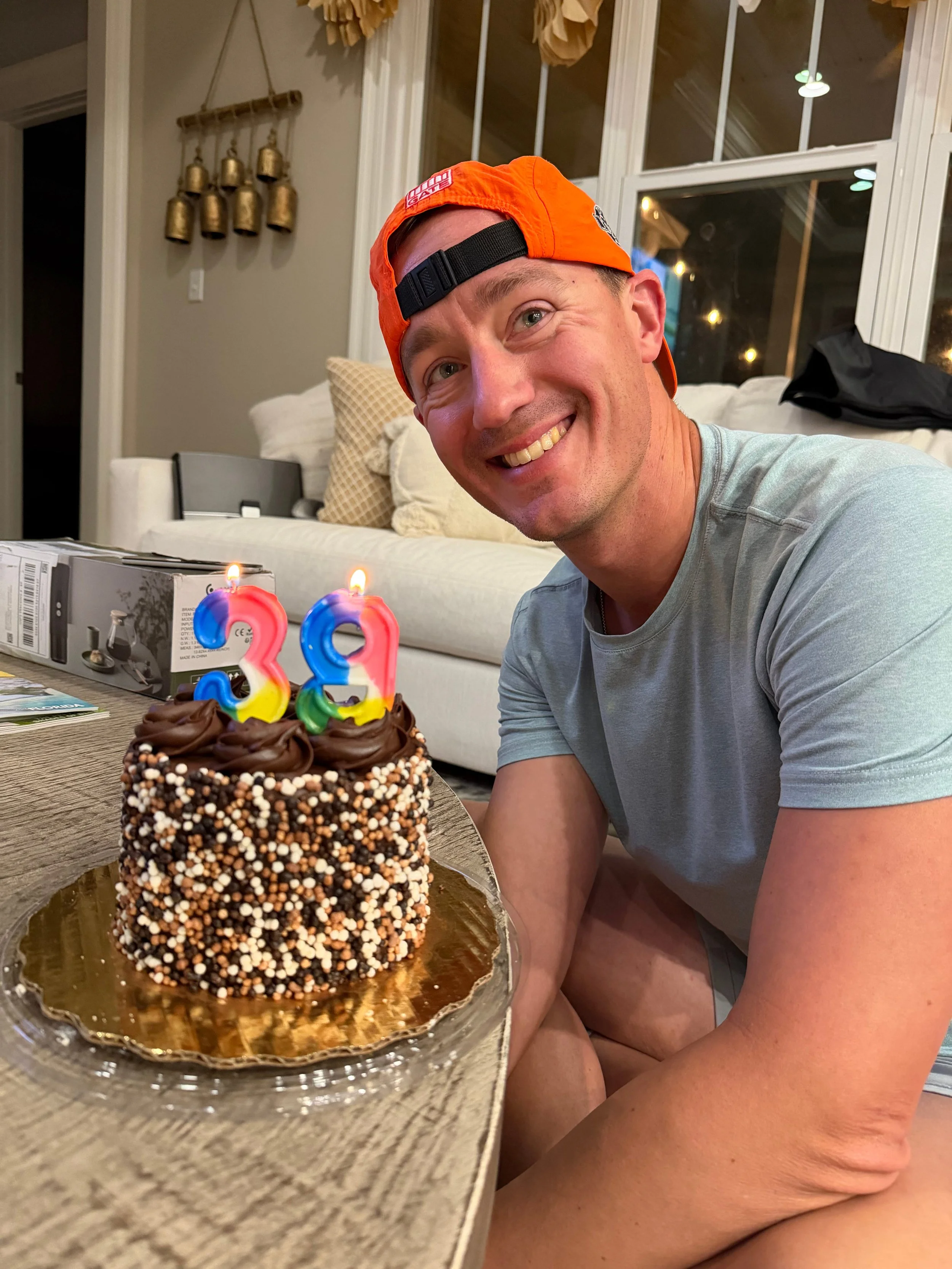
Love the colorful medals and hats this year! Lunch and treats at the European Street Cafe. Happy Birthday Matt!
I can’t leave without sharing my Bible verse for this race. Matt helped me select it. I’m not sure this was the suffering Paul was talking about in Romans, but it definitely applies.
“We rejoice in our sufferings, knowing that suffering produces endurance, and endurance produces character, and character produces hope, and hope does not put us to shame, because God’s love has been poured into our hearts through the Holy Spirit who has been given to us.” - Romans 5:3-5
News & Notes
New article for IRONMAN- What to Expect at Your First IRONMAN 70.3 Triathlon. This is essentially a sneak peek of my book- The Complete Guide to Your First 70.3 Triathlon. Grab your copy here. (Paid subscribers get 20% off.)
Latest for Triathlete Magazine- Top 7 Easiest Ironman Courses, 7 Most Brutal Bike Courses in Ironman, and Guide to Off-the-Beaten-Path Multisport Races
What I’ve enjoyed reading lately:
What Smart Athletes Do in March by Mark Allen
The Missing Metric by Mark Allen
Animals Interrupting Wildlife Photographers by James Lucas
How Art Can Change Your Life by James Lucas
WHOOP Bets Big on Women’s Health by Scott Baldwin
The Waffle House Church by Greg Williams
War, and Rumors of War by Greg Williams