

Ironman and 70.3 Guide For Beginners: Everything You Need to Know
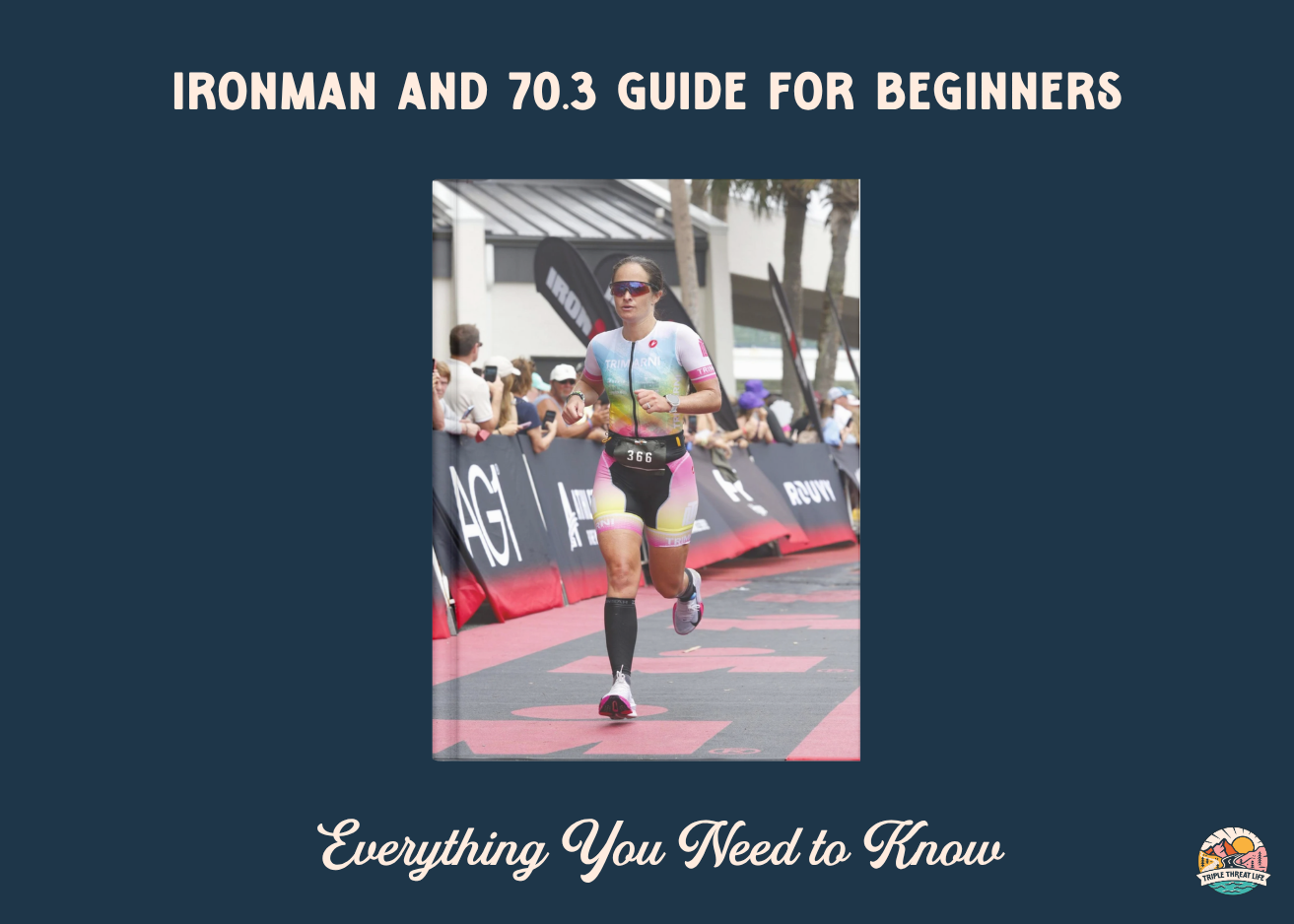
Whether you’re training for your first 70.3 or a full Ironman, the distance can feel overwhelming. This guide breaks down everything you need to know—from training and fueling to race-day execution—so you can show up prepared, confident, and ready to cross your first finish line strong!
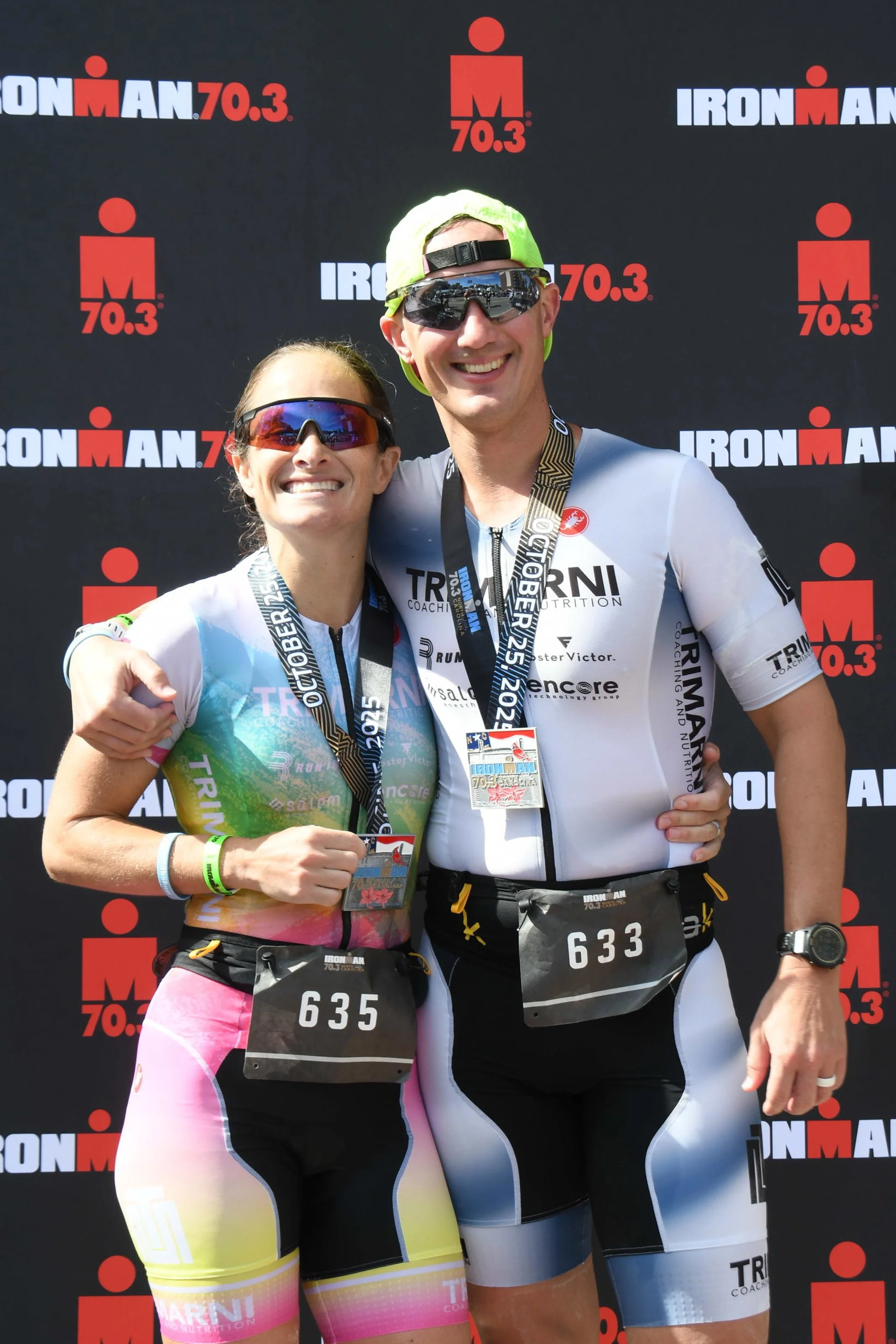
Crossing the finish line of my first 70.3 (and later my first Ironman) was an amazing experience. As I ran down the red carpet and the announcer called my name, I felt a mixture of exhaustion and elation. This was mixed in with some tears and relief that I'd actually made it to the finish line!
Fast forward a few years, and my husband, Matt, and I have competed at triathlons all over the country, in Chattanooga, North Carolina, Augusta, Utah, Florida, Maine, Arizona, and Spain. We’ve done a combined total of 18 70.3 races, qualified for the 70.3 World Championship four times, and completed three Ironman.
We were both well-prepared for those first long-course triathlons, but I remember how intimidating it was as a new triathlete. There’s race week logistics, a massive transition area, aid stations, and rules to follow. You'll be swimming in open water around hundreds of other athletes, riding on unfamiliar roads, and faced with the daunting challenge of running a half marathon or marathon at the end of it all.
Over the years, we’ve been fortunate to learn from some amazing coaches, fellow athletes, and mentors who've shared their insights and encouragement with us. I’m also a triathlon journalist, who interviews top coaches, pros, and experts on a daily basis. So, now it’s my turn to pass on that knowledge to you!
An Ironman triathlon isn’t just for the super fit and fast. It’s a goal that’s achievable with consistent training, the right mindset, and respect for the distance.
What is an Ironman Triathlon?
Understanding the difference between a 70.3 and a full Ironman is the first step in deciding which distance is right for you. A 70.3 triathlon consists of a 1.2-mile swim, 56-mile bike, and 13.1-mile run, done consecutively. An Ironman, or full-distance triathlon, includes double those distances: a 2.4-mile swim, 112-mile bike, and 26.2-mile run.
Both of these are referred to as long-course or long-distance triathlons. There are many shorter triathlon distances, including sprint and Olympic, and it’s highly recommended that you do one of those first, before tackling one of the big boys. You can even use these shorter distances for race prep in the lead up to your 70.3 or Ironman.
Are You Ready for a 70.3 or Ironman?
It’s the question everyone loves to ask: How long will it take to train for an Ironman? The short answer is… it depends. The timeline will vary depending on your current fitness level, background in endurance sports, goals, motivation, available time, and support system.
For a 70.3, it may take 16-20 weeks. For an Ironman, it may take 9-12 months or more if you’re starting from scratch with no swim, bike, or run experience.
Training for a long-course triathlon involves building a solid base of fitness through consistent training, learning good form and technique, working on endurance and durability, and putting the body and mind through pre-race trials that will help you push through the tough moments you will experience during a race.
In the following posts, we talk about what training structure looks like for a 70.3, the types of sessions you will do, the benchmarks you’ll reach, tips for balancing training with work and family life, and the mindset needed to take on a full Ironman.
Planning to do your first 70.3? Grab a copy of my book that explains everything you need to know with information about what training looks like, skills to learn, nutrition, transition, race prep, rules, mindset, and more!
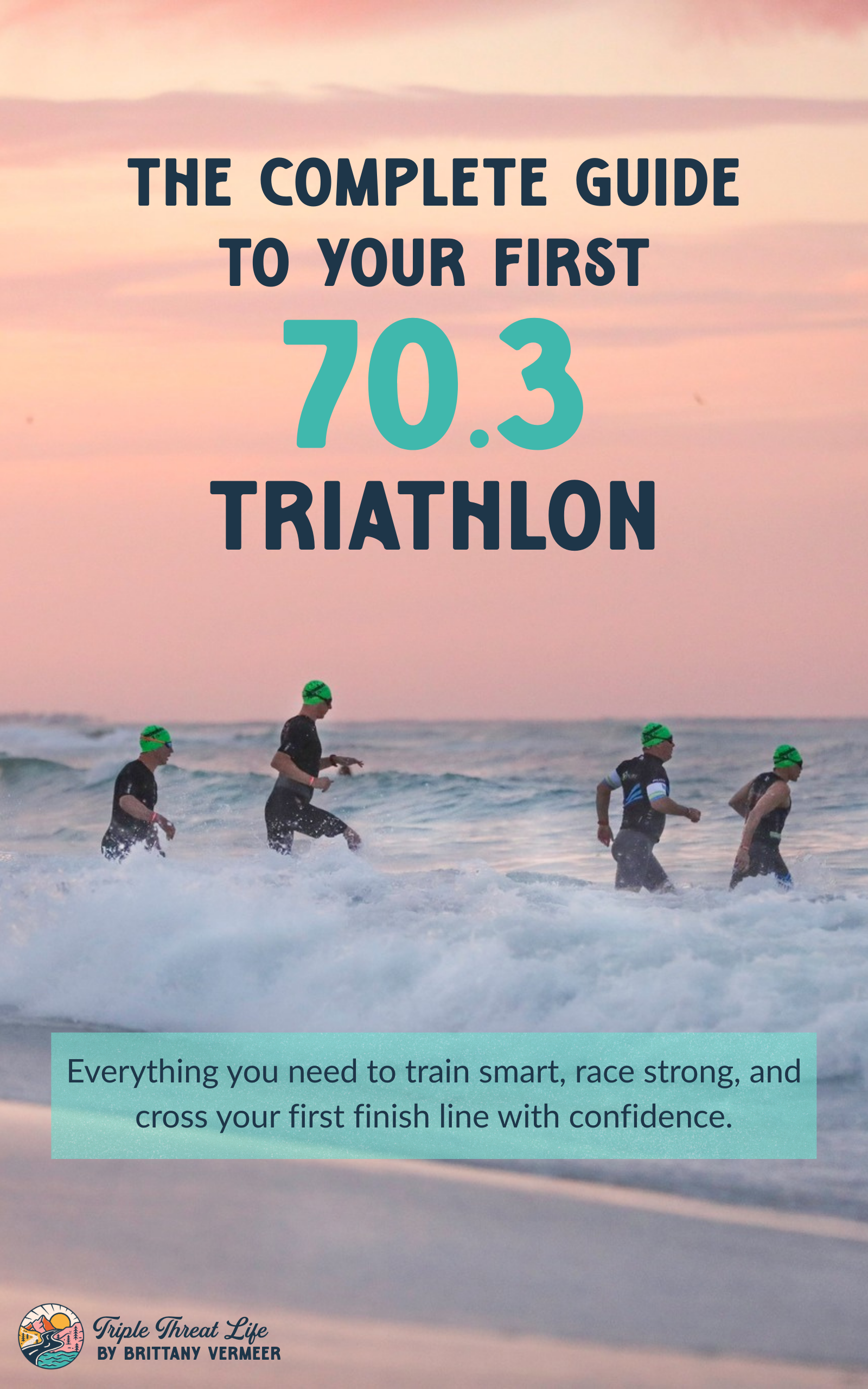
The Complete Guide to Your First 70.3 Triathlon is your all-in-one resource to train smart, race strong, and cross your first Ironman finish line with confidence.
Written by journalist and triathlete Brittany Vermeer (that’s me!) a 12x 70.3 finisher, 2x Ironman finisher, and 4x 70.3 World Championship qualifier. This 100+ page e-book takes the guesswork out of training and race prep and gives you a roadmap to follow.
This is everything I wished I knew before I did my first 70.3 triathlon, and I want to share it with you. :)
Here’s what’s inside:
How training changes from short-course triathlon to long-distance triathlon
Important skills you will need to learn, with my favorite drills to improve
Recommended gear and training essentials
How to conquer open water swimming with confidence
Smart pacing and fueling strategies for race day
Mental tools to stay calm and confident under pressure
Step-by-step guidance for navigating race week, transitions, aid stations, and race rules
Lessons learned from real-world experience— what works, what doesn’t, and what no one tells you before race day
Whether you’re training for your first half-ironman, or just haven’t been able to race to your potential at this distance, this book is for you.
Learn more about training here
Training for a 70.3 or Ironman
Whether you’re doing a 70.3 or a full Ironman, both distances require consistency, dedication, and mental strength. You can’t think about a 70.3 as “just half of an Ironman,” because it has a different physiological cost than an Ironman. It’s often raced at a higher heart rate zone (zone 2- zone 3). On the other hand, a full Ironman produces more cumulative fatigue and is raced at a lower heart rate zone (zone 2). Therefore, the training for each will be slightly different.
A 70.3 triathlon might take an athlete anywhere from 5 to 8 hours, while a full Ironman triathlon could take anywhere from 11 to 17 hours. A 70.3 is the ideal starting point for those new to long course racing and can serve as a natural stepping stone to a full Ironman; if that's something you see in your future.
One of the biggest challenges with Ironman training isn’t necessarily learning how to swim, bike, and run; it’s fitting in the necessary training with work and family life. Ironman is a balancing act, and the most successful athletes are those who commit to learning good technique, stay consistent in their training, and practice essential skills before race day.
Time & Structure
Swim
10 Triathlon Swim Tips to Help You Swim Faster and Save Energy
Open Water Swimming For Triathletes: (Complete Beginner Guide)
Bike
Run
Pacing Strategy
Learn more about fueling here
Fueling for 70.3 and Ironman Triathlon
Nutrition is the fourth discipline of triathlon. No matter how hard you’ve trained, if you don’t have a specific and intentional fueling strategy, you will struggle to make it to the finish line. Here’s some guidance for how to fuel training and race day for Ironman triathlon.
Learn more about race prep here
Race Prep and Logistics For Ironman
Your training will get you to the start line, but your level of preparation, race smarts, and ability to adapt to challenges is what will help you get to the finish. This section covers the logistics of race week, transition, packing gear bags, using aid stations, and covers important rules you need to know before your first Ironman triathlon.
Planning & Prep
Transitions
Smart Racing
Rules & Unusual Circumstances
Ironman Drafting Rules Explained (What You Can and Can’t Do)
How Does the Ironman “Zipper Rule” Rule Pertain to Sports Bras? Head Referee Explains
Don’t Get Disqualified: The Most Common Ironman Penalties (And How to Avoid Them)
Taper & Mistakes
Learn more about mindset here
Mindset for 70.3 and Ironman
Training helps you prepare for an Ironman, but the only time you will put all three distances together is on race day. So, there's always an element of uncertainty- “Am I ready for this?” Just like you train your body, you must also train your mind. This includes letting go of fear and self-doubt, combating perfectionism, setting smart goals, adapting when faced with challenges, and staying calm under pressure.
Additional Resources
As a journalist, I’ve written a number of articles for IRONMAN with insight and instruction for first-time triathletes. Here, you can read a blog series about the journey to my first Ironman. And finally, we have a fun quiz to help pick the perfect Ironman triathlon for you!
Crossing the finish line of your first Ironman is a surreal moment. It marks the culmination of a journey that will test your mental limits as much as your physical ones. But before you register for your first race, it’s important to know what you’re signing up for and to consider whether you’re prepared to take on this challenge.
If you’re feeling overwhelmed by everything that goes into Ironman triathlon, you’re not alone! That’s why I wrote a book that walks you step-by-step through race prep, logistics, and execution so you don’t have to figure it out on your own.
👉 Grab your copy of The Complete Guide to Your First 70.3 Triathlon here.
The Complete Guide to Your First 70.3 Triathlon is your all-in-one resource to train smart, race strong, and cross your first Ironman finish line with confidence.
Written by journalist and triathlete Brittany Vermeer (that’s me!) a 12x 70.3 finisher, 2x Ironman finisher, and 4x 70.3 World Championship qualifier. This 100+ page e-book takes the guesswork out of training and race prep and gives you a roadmap to follow.
This is everything I wished I knew before I did my first 70.3 triathlon, and I want to share it with you. :)
Here’s what’s inside:
How training changes from short-course triathlon to long-distance triathlon
Important skills you will need to learn, with my favorite drills to improve
Recommended gear and training essentials
How to conquer open water swimming with confidence
Smart pacing and fueling strategies for race day
Mental tools to stay calm and confident under pressure
Step-by-step guidance for navigating race week, transitions, aid stations, and race rules
Lessons learned from real-world experience— what works, what doesn’t, and what no one tells you before race day
Whether you’re training for your first half-ironman, or just haven’t been able to race to your potential at this distance, this book is for you.
If you enjoyed this post, you will love my weekly newsletter with training tips, race day insights, video tutorials, discounts, and much more.